
‘Mobile Suit Gundam GQuuuuuuX’ Director Unsure If Today’s Youth “Understand What It Means To Pilot A Robot”

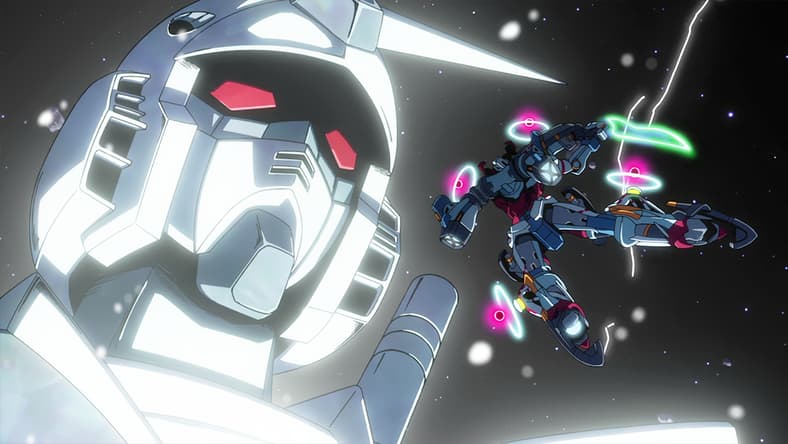
In confronting that sad but nearly unavoidable reality that results from the simple passage of time, Mobile Suit Gundam GQuuuuuuX director Kazuya Tsurumaki has begun contemplating the question of whether or not today’s youth feel any relation to the overall mecha genre, particularly in regards to its core theme of ‘freedom via self-determination’.

RELATED: ‘Gundam’ Manga Publisher Kadokawa Now Recruiting Overseas Talent Due To Japan’s Population Crisis
Tsurumaki, a veteran mecha anime director whose previous credits include Neon Genesis Evangelion, Diebuster, and the Rebuild of Evangelion film quadrilogy, spoke to this melancholic cultural shift while speaking to Yahoo! Japan about his latest work during the recent Anime Expo 2025.
Beginning with a reflection on his leap from animator to full-fledged director, the man widely regarded as Evangelion creator Hideaki Anno’s hand-picked protégé admitted that prior to being given the reigns to 2000’s FLCL, he had actually never even considered the possibility of being the one in charge of all the action.

As machine translated by DeepL:
“I was so focused on wanting to work as an animator that I never considered directing or producing. So, when it comes to the aspects of directing beyond the visuals—such as sound, music, and editing—I’m still feeling my way around and honestly don’t fully understand them yet. Anno is exceptional not only in scriptwriting and visual design but also in those areas. Even when observing his work up close, I struggle to articulate or theorize those aspects. I haven’t been able to learn and make them my own.”
As for his involvement with GQuuuuuuX specifically, Tsurumaki offered the simple explanation that “the reason I took on the role of director this time was because [Evangelion: 3.0+1.01 Thrice Upon a Time producer Yuki] Sugitani, who was working as the production desk—the most challenging position—during the making of Evangelion: 3.0+1.01 Thrice Upon a Time, approached me, and I wanted to respond to his offer.”

From there, the director moved to discuss his own personal history with the mecha genre, in doing so offering the worrying observation that despite once being a pillar of the Japanese entertainment scene, the mecha genre had seemingly ‘fallen out of favor’ in recent years:
“When I was a child, motorcycles and cars were objects of admiration. In that vein, I think there was the idea of ‘pilotable robots’, which served as tools that could allow one to surpass adults, as if leaping straight into adulthood. However, I think the current younger generation doesn’t need that.
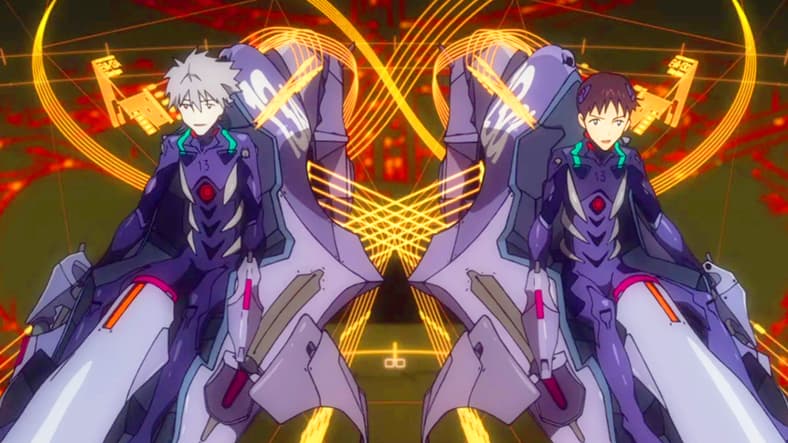
“Even in today’s manga and anime, the protagonists wield superpowers that surpass adults more intuitively through magic or psychic abilities. In games, you can freely control characters on the screen using a controller. Maybe that’s enough for them.
“I wonder if they even understand what it means to ‘pilot a robot’. The generation that once aspired to motorcycles and cars is still barely active, but in another 10 years, the Gundam series might not survive. While creating the Evangelion [Rebuild] series, I once again felt the need to update the meaning of robots.”
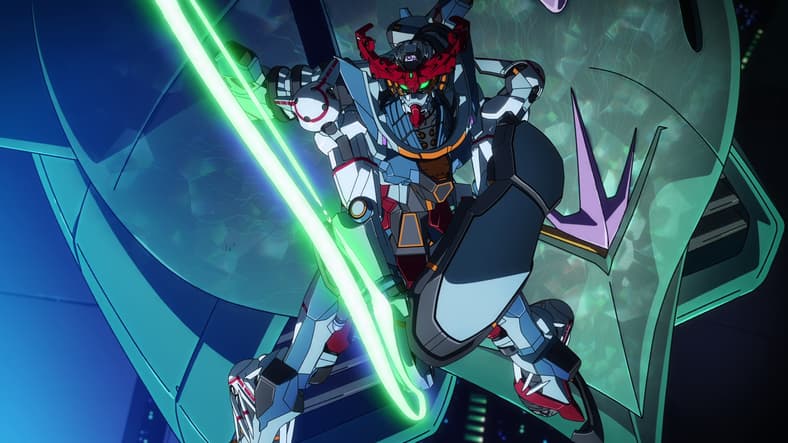
On that same note, when later asked if anything had “changed within” him during his time on GQuuuuuuX, Tsurumaki would admit that, for the first time, he felt as if he had made a work ‘for others’ rather than ‘for himself’:
“I felt something different than usual. Normally, I create for myself first. I believed that creating what I found most interesting was the honest thing to do as a creator. However, this time was a little different, as I always had the feeling that I was creating for someone else.
“I was surprised to discover this service-oriented mindset in myself. I’m not sure if it’s because I had just finished the long-running Rebuild of Evangelion series, or because this wasn’t something for terrestrial TV but rather something aimed at the general public TV, or because it was Gundam—I’m not sure (laughs). It might be the mindset of someone in their late 50s like me now, or perhaps it’s because I became more objective in the process of directing a worldview and characters created by others rather than my own creations.”