Exclusive Interview With Indie Comic Distributor Phillip Russertt Of Philbo Distribution

It is a dark time for comic books. Although the longstanding monopolies have been destroyed, the old guard still resists change, and continue to drive back independent creators looking to breathe new life into the medium. By dominating the retail market, and limiting creator ownership, it’s clear that they’d rather have the ship sink before they let some outsider save it. It is in these times of uncertainty that fate begins to turn the tide, and a new hero arises.
RELATED: Legends Of Old And New Gathered As One In Artist Alley At Fan Expo Chicago 2025
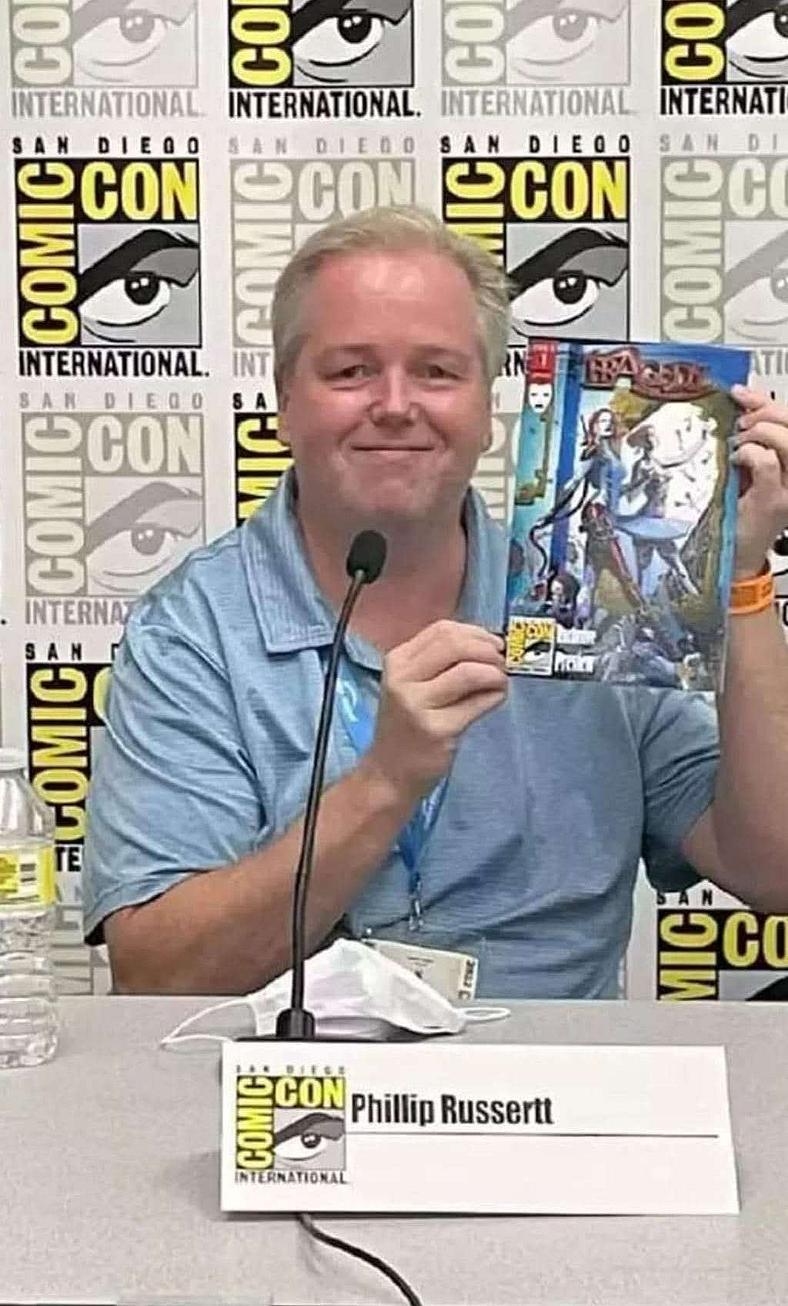
Originally from the tough borough of Queens in New York City, Phillip Russertt started with collecting comic book art, and traveling to conventions around the country to mingle with creators. Then he started his own convention in 2018, but COVID put the event on indefinite hiatus, and then it almost put him on permanent vacation. On top of the virus, he contracted pneumonia, and several blood clots in his lungs and legs. This experience led to muscle atrophy, losing 60lbs in only three days, and 40 liters of oxygen to stay alive, but it got him into writing as well before finally making a full recovery. Fully aware of the 2nd chance he was given, Russertt decided to become a comic book creator.
After writing and publishing several books on his own, he was contacted by oversea independent creators who were looking to publish their books, but they lacked the resources to do so, and that’s when Philbo Distribution was born. The air has been full of uncertainty about the medium’s future even since Diamond Distribution’s fall from the top. This is only because a majority of the myopic masses are incapable of imagining a world where everything isn’t centralized, and a free market is allowed to flourish. Mr. Russertt is not only capable of imagining that, but he’s more than willing to help with bringing it to life.
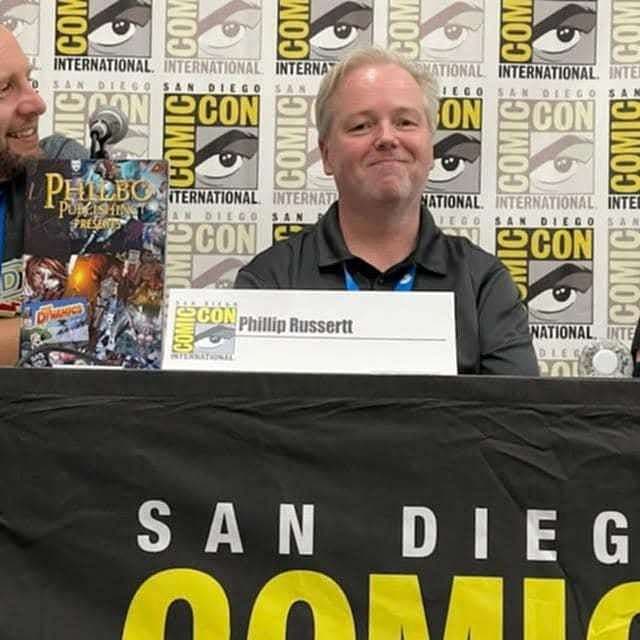
With such big-name publishers like Zenoscope, Devil’s Due, Antarctic Press, and the legendary Heavy Metal Magazine it appears that Phillip Russertt is in this fight for the long haul. I had a chance to talk with the 52-year-old father, husband, former musician, and Registered Nurse by day about Philbo Distribution, and the unexpected journey that brought him here.
Dante Aaricks: So, Phil, when did you first get into comics?
Phillip Russertt: I was 9 years old, and on a spinner rack I saw Uncanny X-Men #115 with John Byrne’s art on the cover, and it just blew my mind.
DA: That’s a great introduction to the medium. What was your next stop after Uncanny X-Men?
PR: Everywhere. Avengers, Fantastic Four, Spider-Man, Daredevil, and everything else Marvel had to offer.
DA: So, it’s pretty clear on which side you took in the battle of the Big Two.
PR: Oh, I was a big Marvel head, but also a little bit of DC. I liked the Teen Titans from Marv Wolfman and George Perez. I did like the Justice League, and I was a big fan of Superman. I’m kind of a cornball. I like the “Boy Scout” Superman.
DA: Nothing wrong with that.
PR: In the 90s, I started to get more into DC as they started to get more serious then I ventured out into Image, Valiant, and that’s how I started learning about the more independent, obscure books.
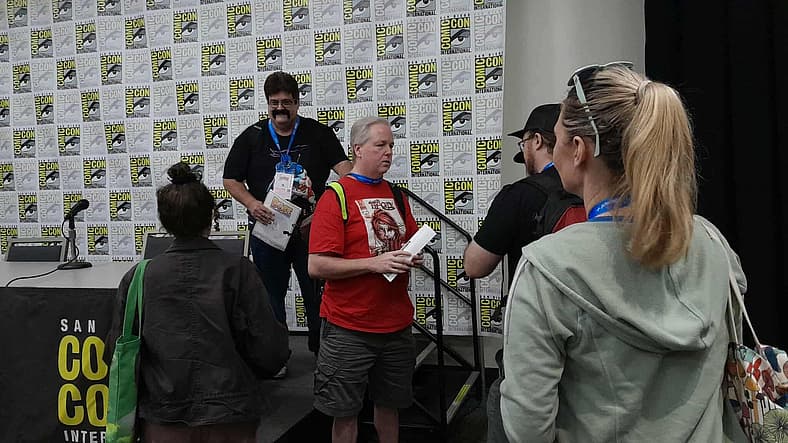
DA: How did you go from a reader to a convention runner?
PR: Ironically enough, I wanted do something to help promote the [comic book] store that’s near me. I proposed that we do a small “thing,” and I could get a bunch of local bigger names that I know to come. He was all for it, and I got all the artists, but then he bailed on me.
DA: Wow…
PR: I had all these artists on the line, and I didn’t want to cancel it because that looks bad. So, I got a bigger venue, ran the show myself, invited all the artists, and it did really well. We continued doing it with couple more shows with big names like Mark Bagley, Jim Steranko, Scott Williams, Alex Sinclair, and Adam Kubert. We had a lot of fun.
DA: Was it called Creatorcon back then?
PR: No, it was Suffolk Comic & Art Expo. I rebranded it right when COVID hit, but we haven’t had an official Creatorcon yet.
DA: Did you make these connections with these big names at the local conventions, or did you accost them on the streets of New York City?
PR: Being a big fan of art, I went to conventions in different states, and just started talking to people. After years of building a rapport with them, I started inviting them to shows, and they were all in. When it was a success, and the artists made a fair amount of money for attending, they were more than happy to come back for the next show.
DA: What made you decide to take the leap from that to publishing, and distribution?
PR: I’ve always had a vivid imagination for storytelling, but I was always intimidated by writing. Which I think a lot of people are. Then when I got really sick, it didn’t look good. I was in bed for six weeks, and the prognosis wasn’t good at the beginning, but I started to get better. I was bored one day, and I was like, ”You are facing mortality. What the hell are you afraid of?”
DA: Live today, or die today.
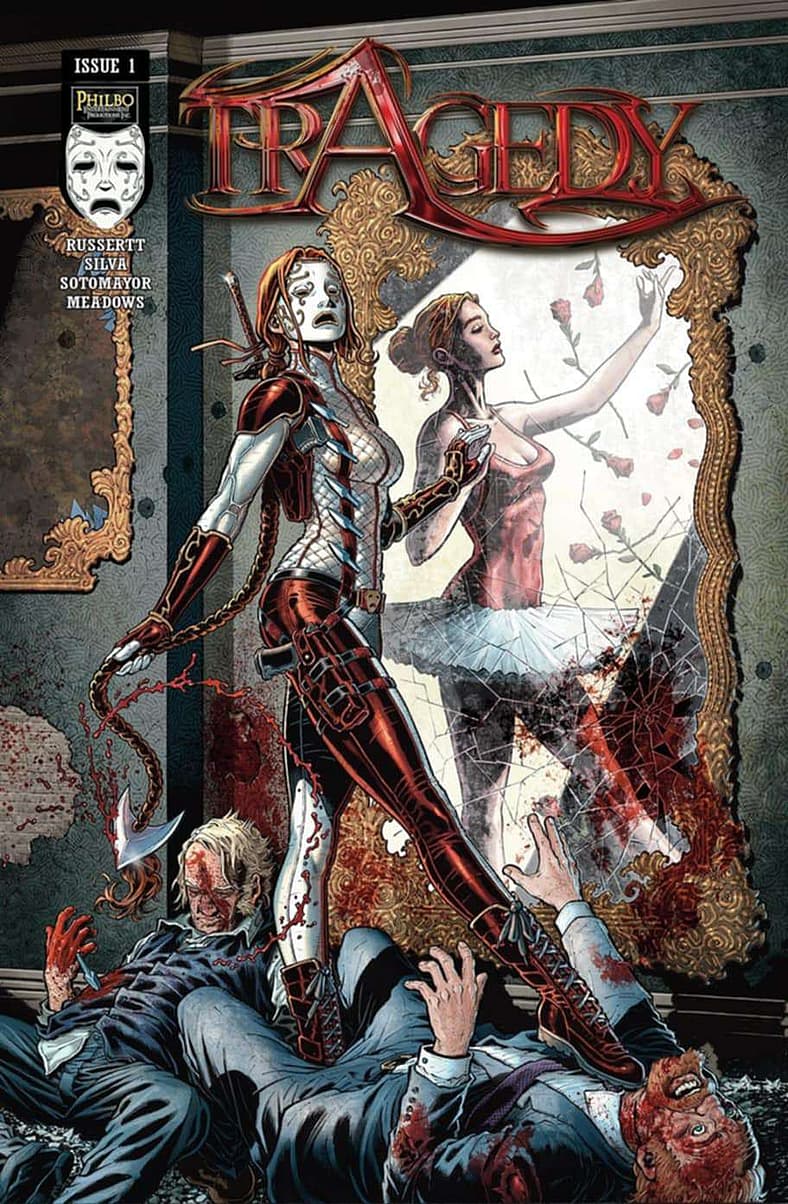
PR: So, I decided to start writing. I had this vision of a character in my head, and it happens to be my flagship character, Tragedy. It was originally supposed to just be Tragedy, but then I had all of these other ideas floating around in my head, and now that I had the confidence, I just kept writing. Eventually, I considered myself a publisher because I had multiple titles. Then I started getting phone calls from people overseas who couldn’t get onto crowdfunding platforms in their countries saying, “Would you publish me?” That’s when I started really venturing out, and publishing other people’s IPs as well. Technically, it started in 2021, and the whole thing just continues to keep evolving.
DA: Where did the name Philbo come from?
PR: Well, my name is Phil Russertt. I’m also a huge Lord of the Rings fan with big, Hobbit-like feet. My wife would call me “Philbo” as a joke, and that became my nickname. So, I took the most important thing in my life, my family, and melded it together with the 2nd more important thing which is my comic business.
DA: I’ll spark some pipe-weed to that.
PR: [Laughs]
DA: Who was the first publication to join your ranks?
PR: If I remember correctly, the first person to sign up was J.E. Medina of Get Your Medz with his book, Wonder Duck. After that, Homebrewed Comics came on with their three titles. Then Zenescope followed, and Antarctic Press.
DA: Jump to the present, and you’ve just enlisted longtime publication, Heavy Metal.
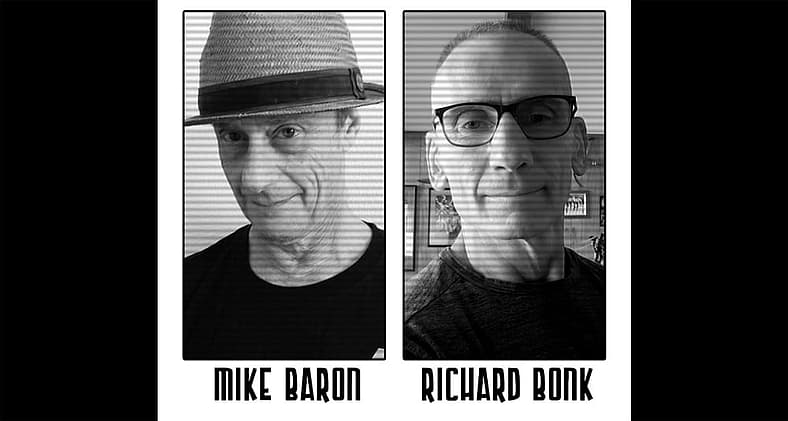
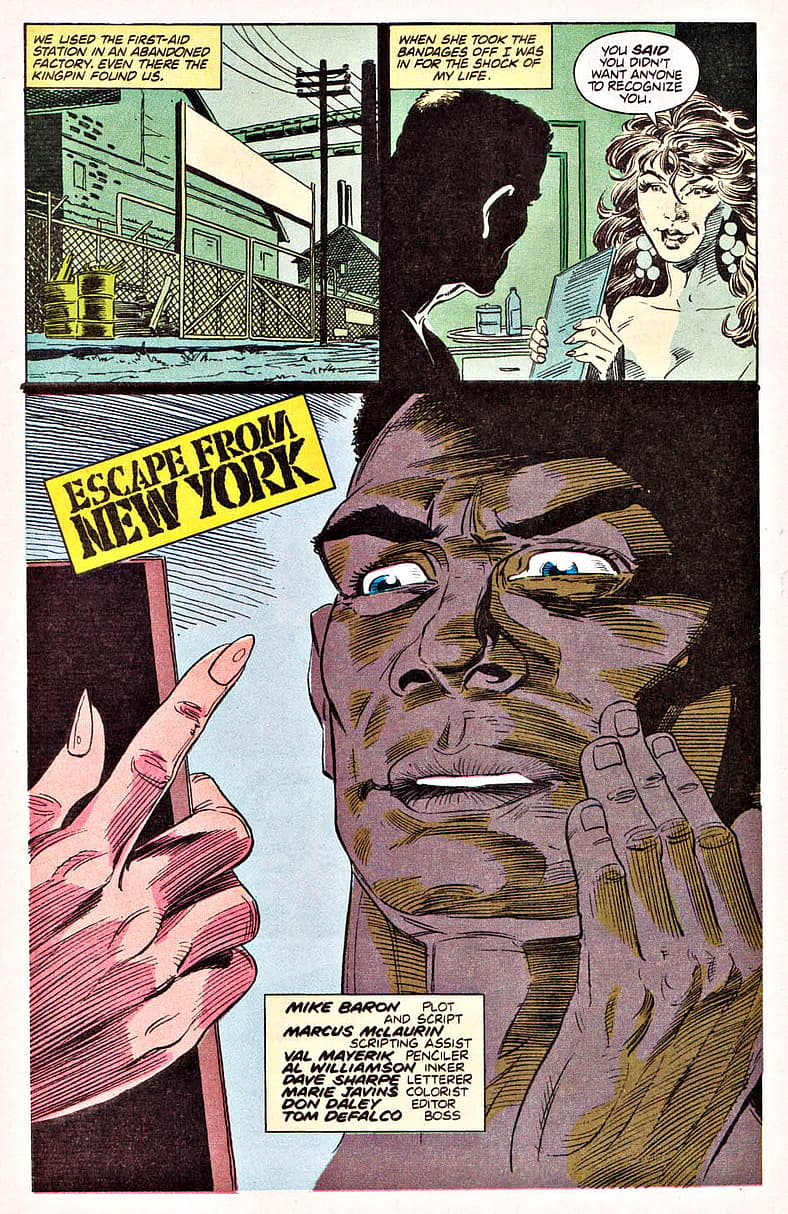
PR: Yeah! We also just got Nexus with Mike Baron and Steve Rude.
DA: How did you win over these people? What was the magic word?
PR: I just talked to them, and showed what I have to offer. Timing is everything. I knew what the climate was going to be, and when it was going to be, and I launched distribution at the right time when there was a need. When you’re providing a service that people need, it’s not really hard to convince them.
DA: How many comic books shops do you have signed up so far?
PR: 526.
DA: How many countries?
PR: We’re in Germany, Sweden, Canada, Mexico, Australia, a few other places in Europe, and obviously the United States.
DA: Obviously! What are your thoughts on the current state of the comic book industry?
PR: Well, things are in flux, but I think it’s a good thing. I think the way things have been run the past 40 years has led to where we are now. There were mistakes made, gatekeeping, and monopolies that didn’t help the industry, but helped with its decline instead. A lot of people are in denial, and they get comfortable. So, when something as severe as Diamond folding shakes the earth, everyone starts to wake up, and realize that change is upon us. That’s when people step up, and make those changes happen.
PR: Right now, where things look grim and numbers are down, I think we’re going to be shifting towards a healthier system. We’ve gotten rid of the monopoly. We have multiple distributors, which is a very important because I believe in a free market to create healthy competition. Then of course indie people getting a voice, and the chance for their books to be sold in stores.
