Marvel Comics Confirms Captain America Returns Post-9/11 Thanks To Sliding Timescale, Reveals War On Terror Received Its Own Star-Spangled Avenger

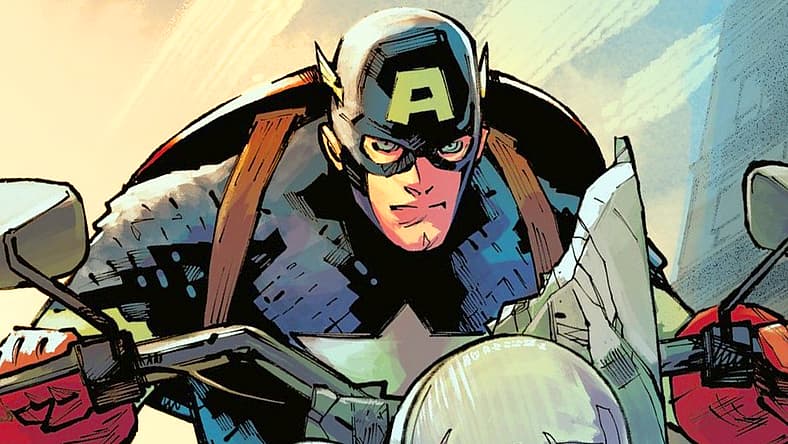
In a stark reminder of the passage of time, the premiere issue of the newly-launched Captain America Vol. 12 has confirmed that thanks to Marvel Comics’ ‘sliding timescale’, the Star-Spangled Avenger’s re-emergence from the frozen waters of the Arctic Ocean now takes place sometime after both the 9/11 terrorist attacks and the initial stages of the War on Terror.
First named in 2005’s Official Handbook of the Marvel Universe: Alternate Universe Vol. 1 #1 amidst the entry for the MC2 line, the ‘sliding timescale’ essentially holds that the entirety of Marvel Comics canon, at all times and up to the latest published issue, takes place in the last 15-years of real-world time, thus allowing Marvel Comics to publish stories about the height of the Heroic Age while still keeping their past stories relevant to the given era.
“We have a general guideline in that we approach the passage of time in the Marvel Universe based on the earliest sliding event which is the birth of the Fantastic Four,” explained current Marvel Comics Executive Editor Tom Brevoort in a January 2025 edition of his personal Man With A Hat Substack blog. “At the moment, and for the past decade or two, we’ve operated under the broad belief that this event happened around 15 years ago, and so everything that’s happened since continually gets compressed into that time period, with specific moments expanding out as needed for modern stories. But there isn’t a formula for it, nor can there be, as the starting point is continually shifting, and we’re not consistently accruing more time within that span. This is fiction, so we want there to be verisimilitude. But we do what’s best for the stories, that’s more important than the continuity, and what needs to be served first.”
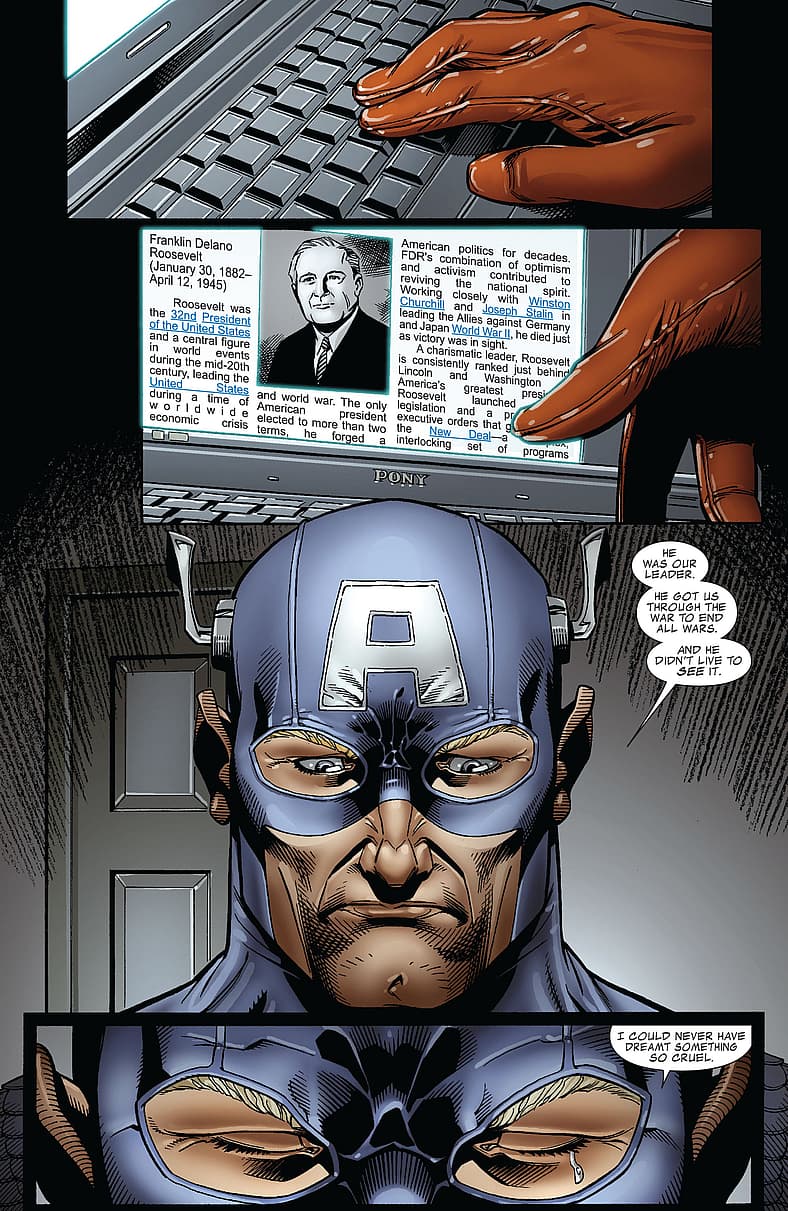
As a result of this literary device, the years have regularly seen certain moments and events throughout Marvel Comics history brought more in line with the current era.
For example, while 1962’s Tales of Suspense Vol. 1 #39 sees Tony Stark creating his first suit of armor during the Vietnam War, 2009’s Invincible Iron Man Vol. 2 #18 portrays the birth of Iron Man as taking place amidst the War in Afghanistan, with 2019’s History of the Marvel Universe Vol. 2 #2 further changing the relevant conflict to the fictional Siancong War.
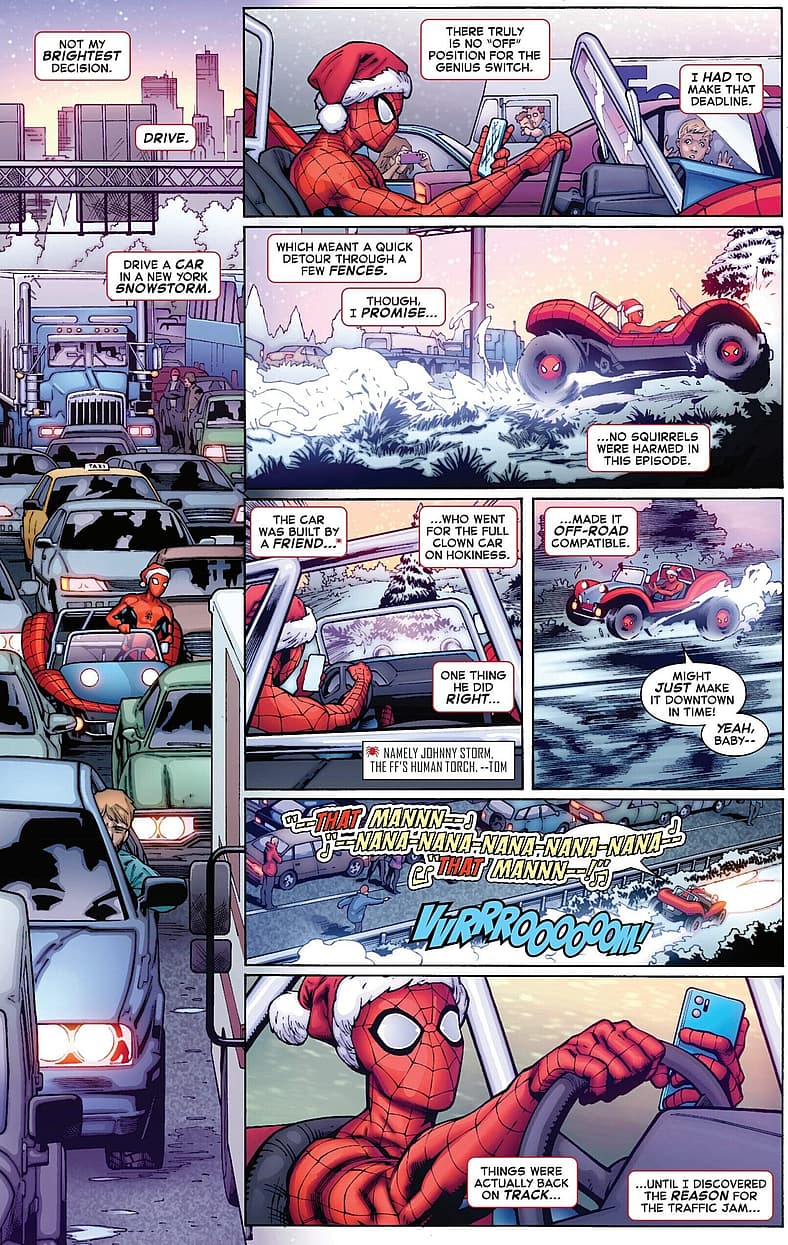
Likewise, in 2024’s Marvel 85th Anniversary Special Vol. 1 #1 one-shot, when revisiting Spider-Man’s adventures with the Spider-Mobile circa 1973’s Amazing Spider-Man Vol. 1 #130, the wall-crawler can be seen actively using a smart phone while behind the wheels of his custom ride.
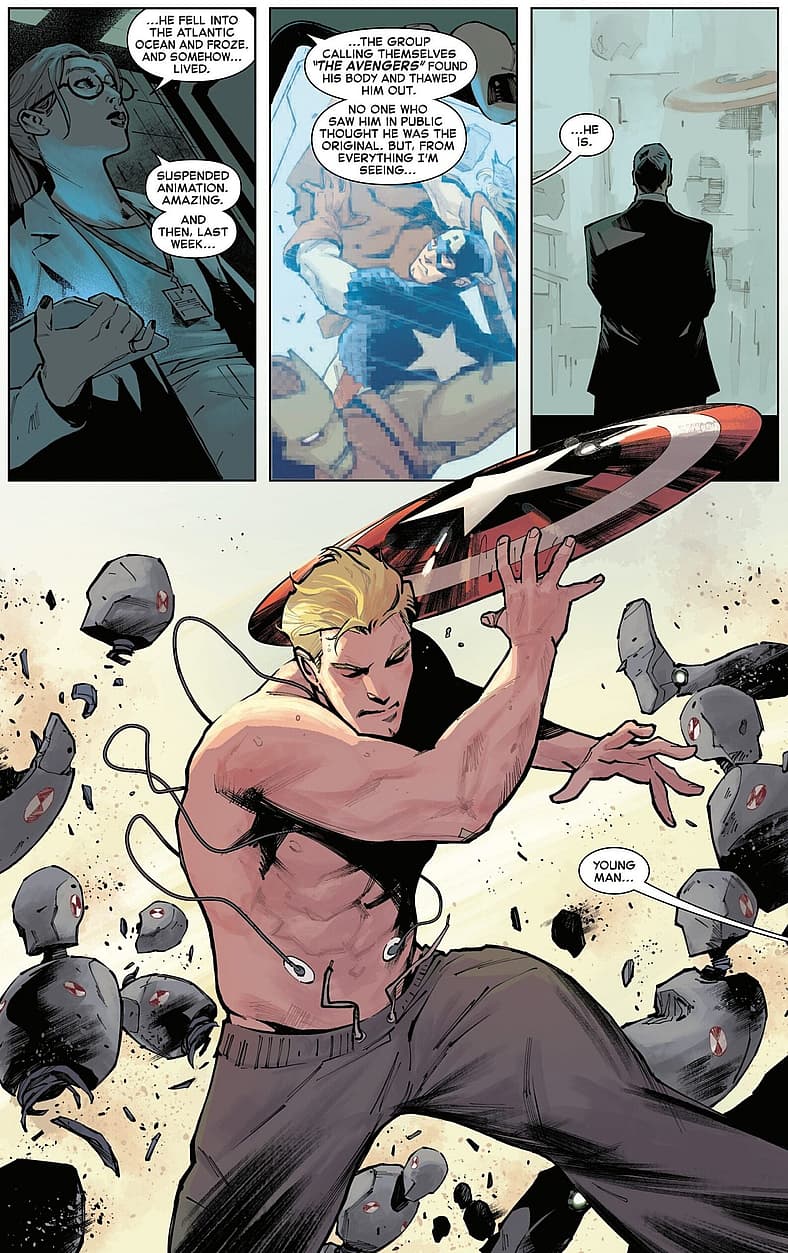
Yet despite being one of the most definitive moments in the entire Marvel Universe, Cap’s return to the present has unsurprisingly gone through very few changes date changes, mostly by virtue of his time in the ice providing writers with a simple explanation for his appearance in any given era.
Notably, the most concrete update to Cap’s origin was made in 2010’s Captain America: Man Out of Time, wherein the Sentinel of Liberty’s ‘unfreezing’ date was definitively established to occur not in the 1960s, but rather sometime after the 1995 Oklahoma City bombing attack.
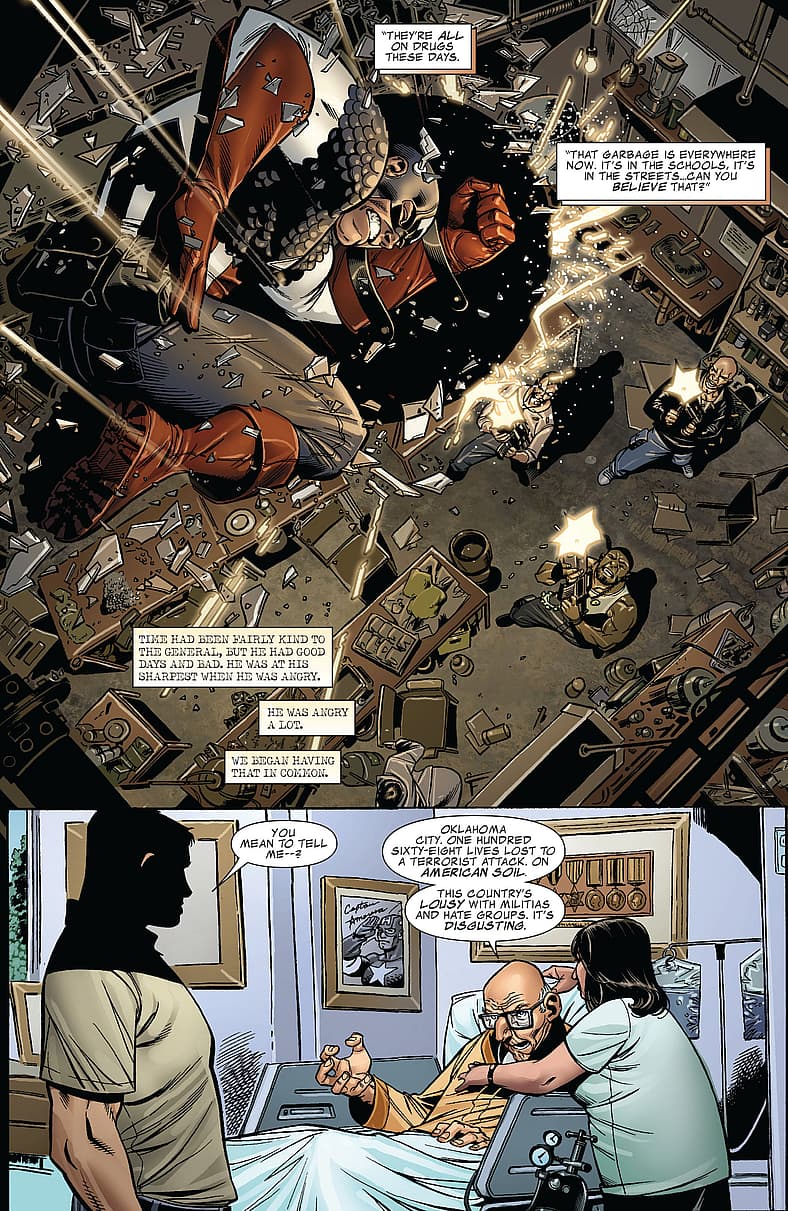
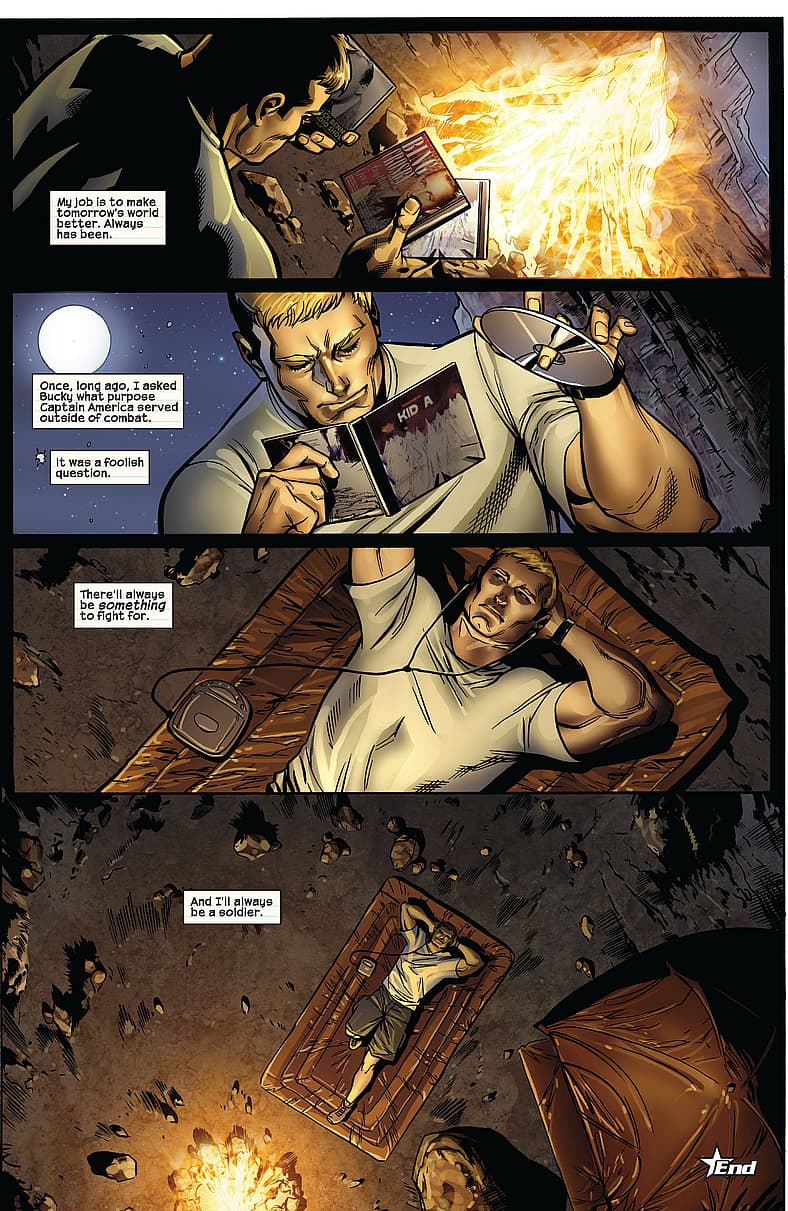
To this end, despite showing Cap navigating a world filled with video-capable smartphones, widespread internet access, and CD copies of Radiohead’s Kid A , the miniseries never directly mentioned the 9/11 terror attacks, with Marvel Comics ostensibly choosing to kick the uncomfortable can down the road.
However, with the publication of Captain America Vol. 12 #1, Marvel Comics’ aforementioned sliding timescale has forced them to finally address the question of ‘Where was Steve Rogers on 9/11?’
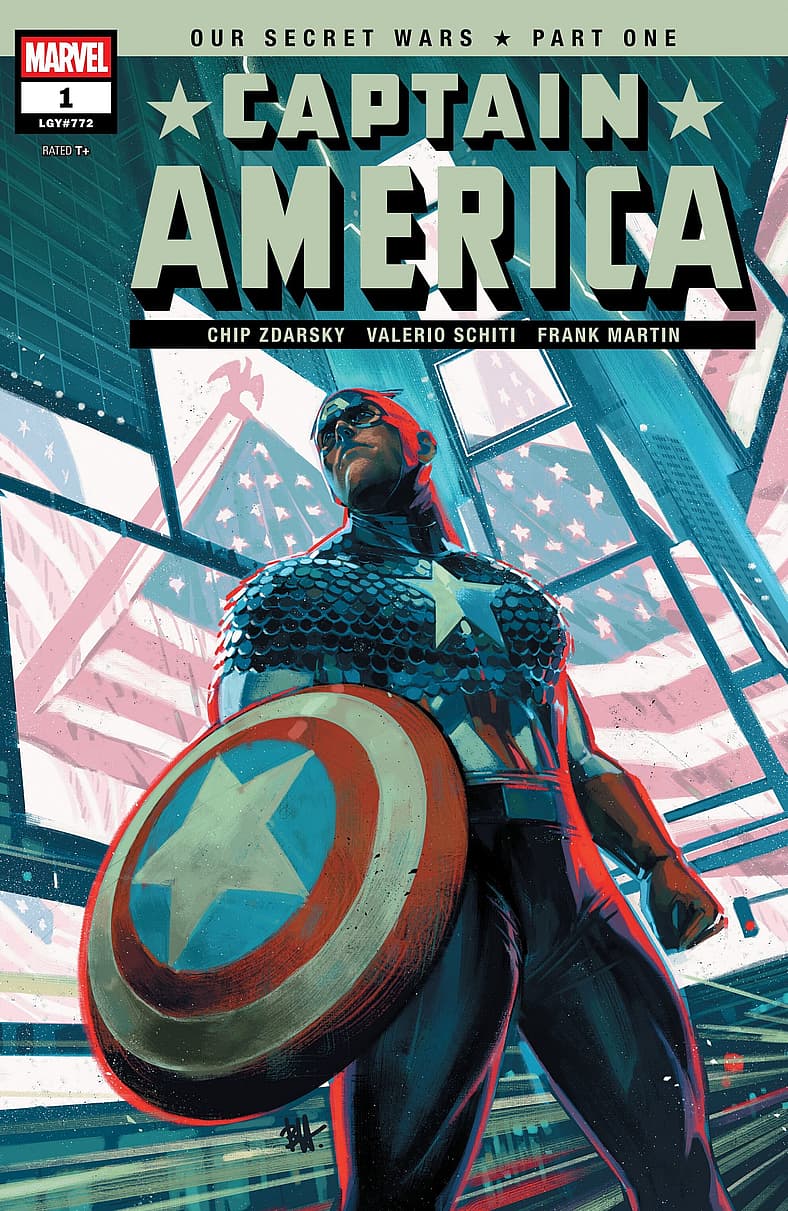
And as it turns out, current canon now holds that he did not get rescued from his icy tomb until well after the towers fell.
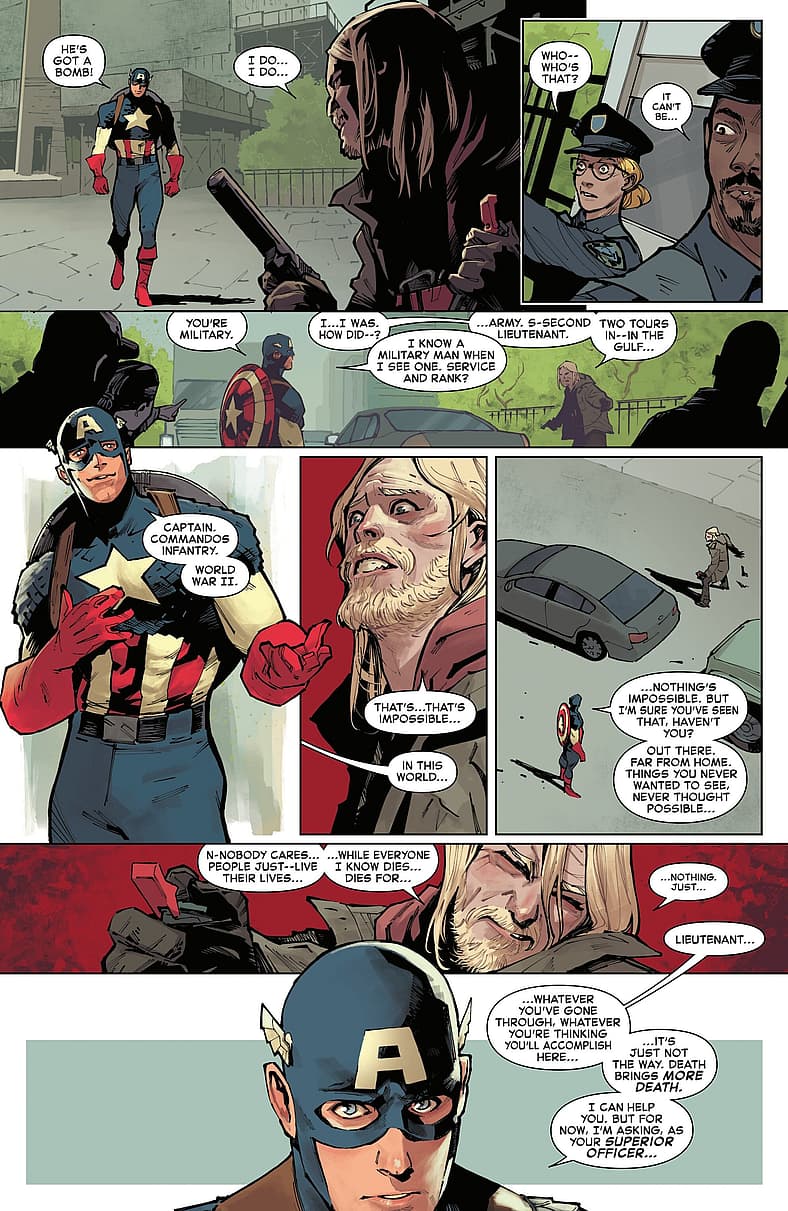
Per the issue, as penned by former Daredevil Vol. 6 and Batman Vol. 3 writer Chip Zdarsky, the first hint to Cap’s post-9/11 return is seen in the book’s opening flashback, wherein Cap recalls how one of the first threats he stopped following his revival was a bombing of the United Nations building by an aggrieved veteran of the Iraq War, which itself kicked off in 2003 under the false guise of stopping Saddam Hussein from amassing supposed ‘weapons of mass destruction’.
His updated timeline is further confirmed by the the reveal that, in addition to William Naslund, Jeffrey Mace, William Burnside, the United States had made one other attempt at replacing the presumed dead Steve Rogers – and this particular candidate had been directly inspired to serve after personally experiencing the events of 9/11.
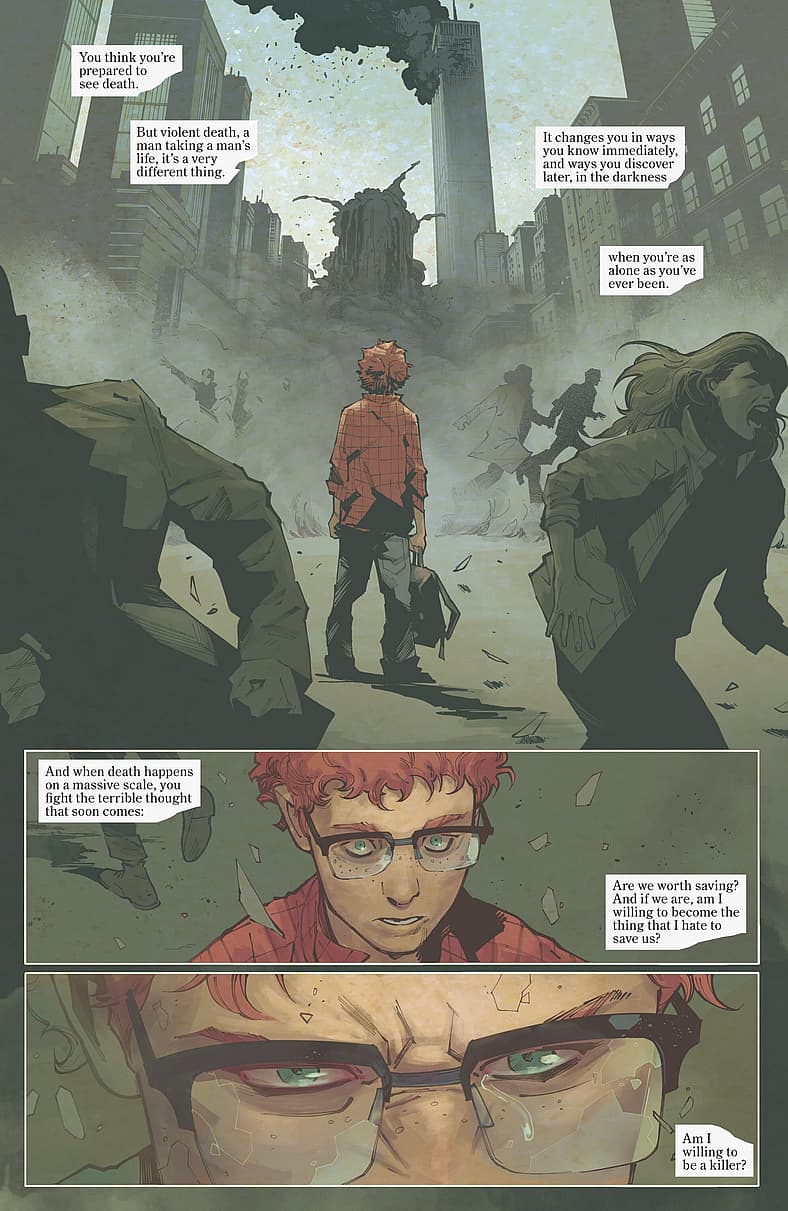
Bearing a striking physical and emotional profile similar to a pre-serum Rogers, the man born David Colton would join the military as a teenager, only to find that his weak stature made him the prime target for violent bullying at the hands of both his fellow recruits and his own Sergeant.
Eventually, Colton’s unwillingness to give-up on his dream of following in Rogers’ footsteps would catch the attention of his superiors, who would proceed to call upon him to the wield shield, with the final page of the issue showing him fighting alongside US forces during their invasion of Iraq.
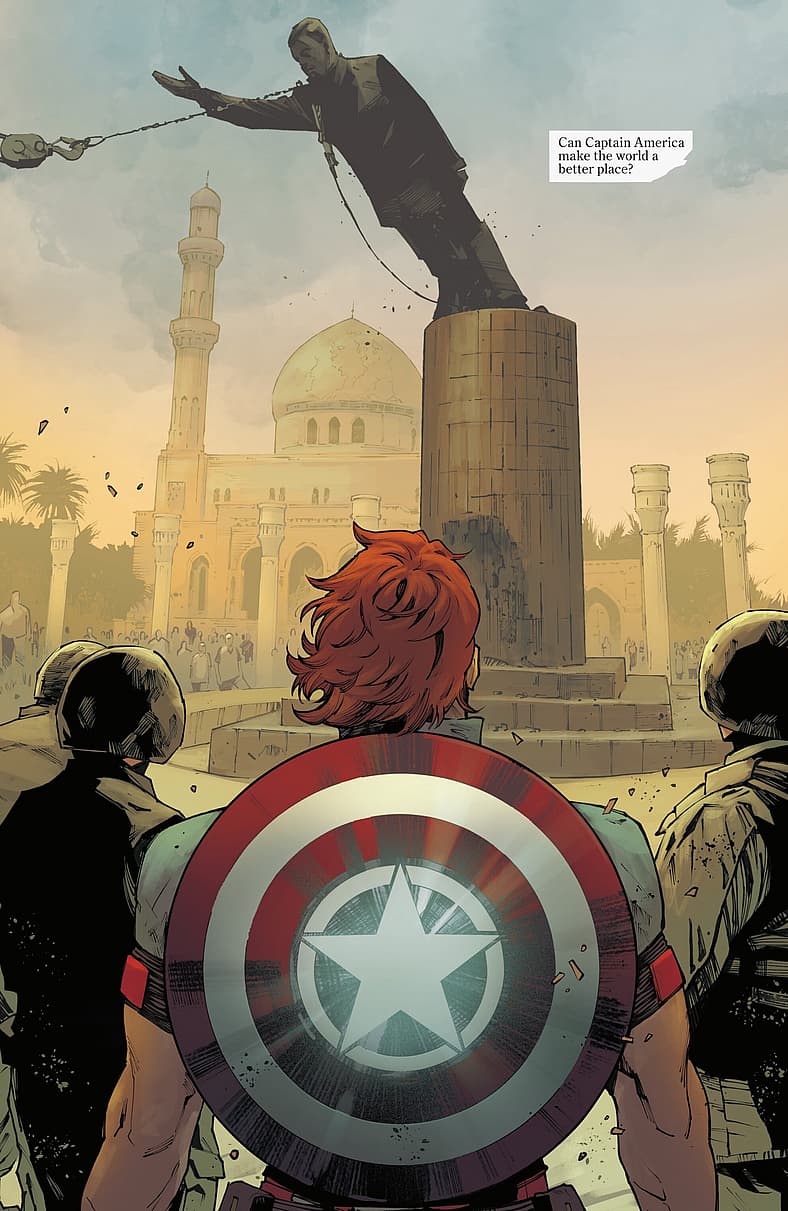
Outside of his witnessing of 9/11 and his service in the War on Terror, very little is presently known about David Colton – understandably so, as he has thus far only appeared in Captain America Vol. 1 #12.
However, more details regarding his character – including how well he works alongside Rogers himself – will likely unfold in future issues of Captain America Vol. 12, the second of which is set to release on August 6th.