DCU Max Lord Is “Inspired By The Original Version”, Says James Gunn: “So Don’t Be Waiting For Him To Shoot Blue Beetle In The Face”

In a particularly welcome move considering the establishing tone of Superman, James Gunn has confirmed that while the DCU’s version of Maxwell Lord is directly inspired by his comic book counterpart, he takes more after the “”original”, get-rich-quick-scheming incarnation rather than the edgy, mind-controlling ‘super villain’ seen in recent years.

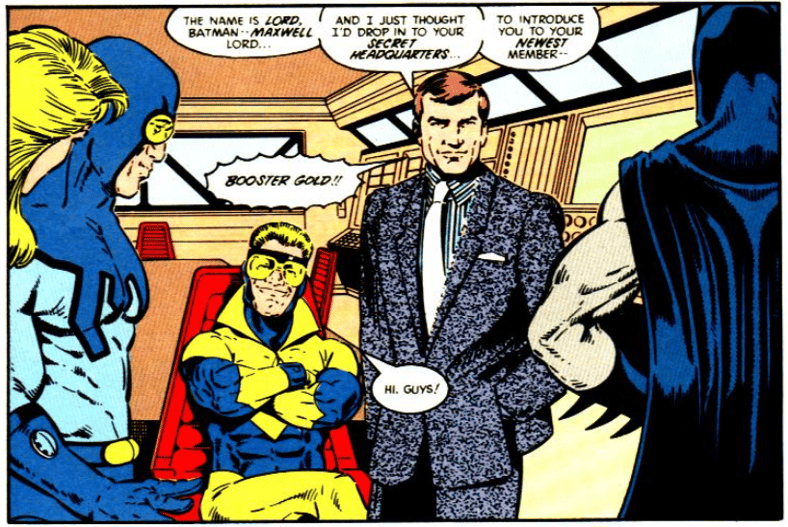
Making his DC debut all the way back in the premiere issue of Keith Giffen, J.M. DeMatteis, and Kevin Maguire’s 1987 classic Justice League International Vol. 1, the eponymous proprietor of Maxwell Lord Enterprises was originally portrayed as a sleazy, if not particularly cunning businessman who sought to make a name for himself – and a dollar – by uniting and subsequently directing the titular team.
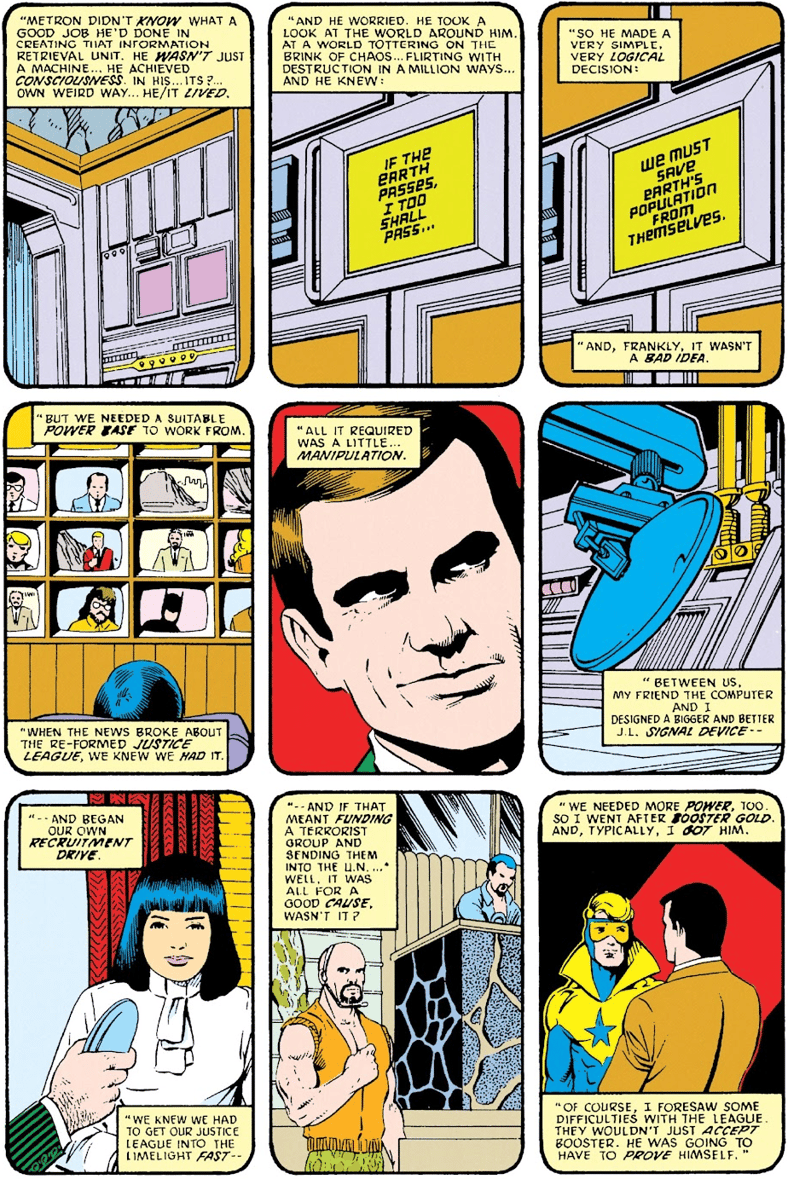
Despite the ‘greater good’ achieved by the Justice League’s re-assembling, it would soon be revealed that Max was manipulated into doing all this as part of a plan by the villainous super intelligence Kilg%re to gain ever-greater access to the world’s computer systems, which he would then use to completely remake Earth in his own technological image.
Eventually snapped back to his senses thanks to a failed assassination attempt, Max proceeds to seek redemption by not only smashing his mechanical master to pieces with his own bare hands, but thereafter reinventing himself as a sort of ‘con man for the superhuman stars’.
Continuing on as the team’s publicity agent/financial backer, Max’s life would see another significant shake-up following DC’s 1989 intra-company crossover Invasion!, wherein the detonation of the Dominators’ Gene Bomb would transform him from a regular human into a metahuman with the ability to not only control others’ minds, but also outright dominate their wills.
And while the proceeding years would be particularly rough on the business mogul, between his mind being hijacked by The Extremists supervillain team and used as a weapon against the Justice League, a brain tumor killing off his human body and forcing his mind’s transfer into a robot body (itself formerly belonging to The Extremists member Lord Havok), and his mother’s killing by Cyborg-Superman during his attack on Coast City, he would continually prove himself a genuinely changed man, most notably via his unending (if not financially selfish and all together unsuccessful) attempts to keep the Justice League International’s original roster of B-listers ever on the frontlines of the superhero world.
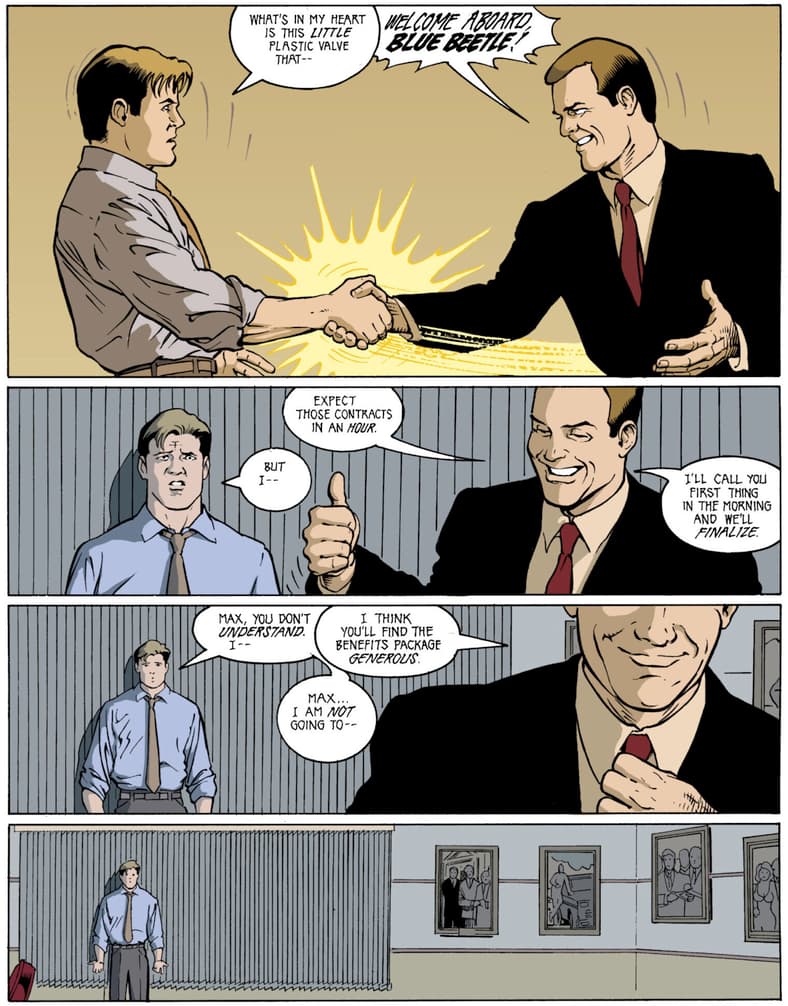
Alas, Max’s dance with his self-defined version of altruism would be forcibly brought to a close in 2005’s Countdown to Infinite Crisis Vol. 1 #1 one-shot.
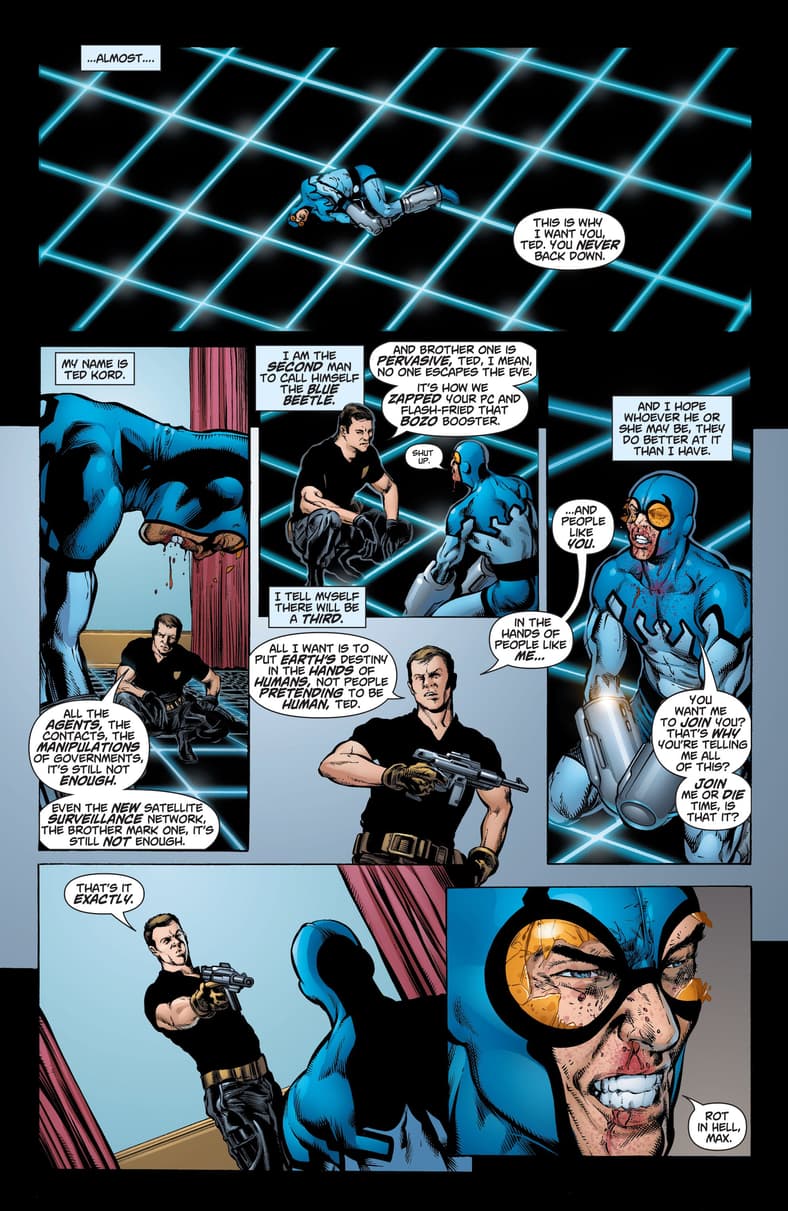
Serving as the starting gun (no pun intended) for the titular event, the Geoff Johns, Greg Rucka, and Judd Winick-penned issue saw the second Blue Beetle, Ted Kord, putting his sleuthing skills to work and unravelling a massive plot by the shadowy intelligence agency Checkmate to both surveil and subsequently eliminate the entirety of the world’s metahuman population.
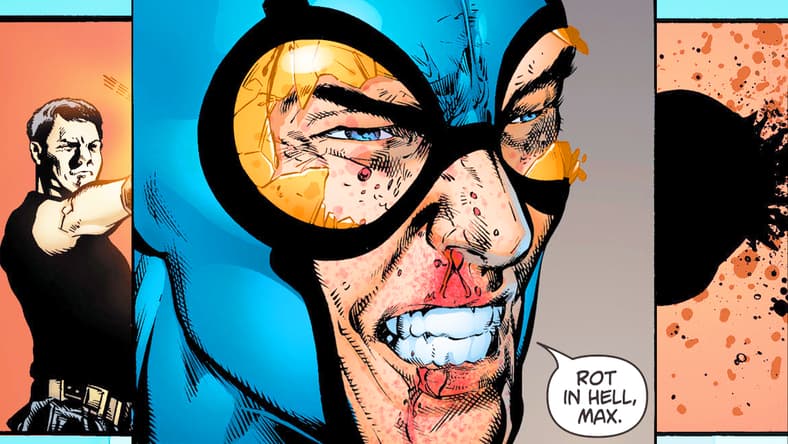
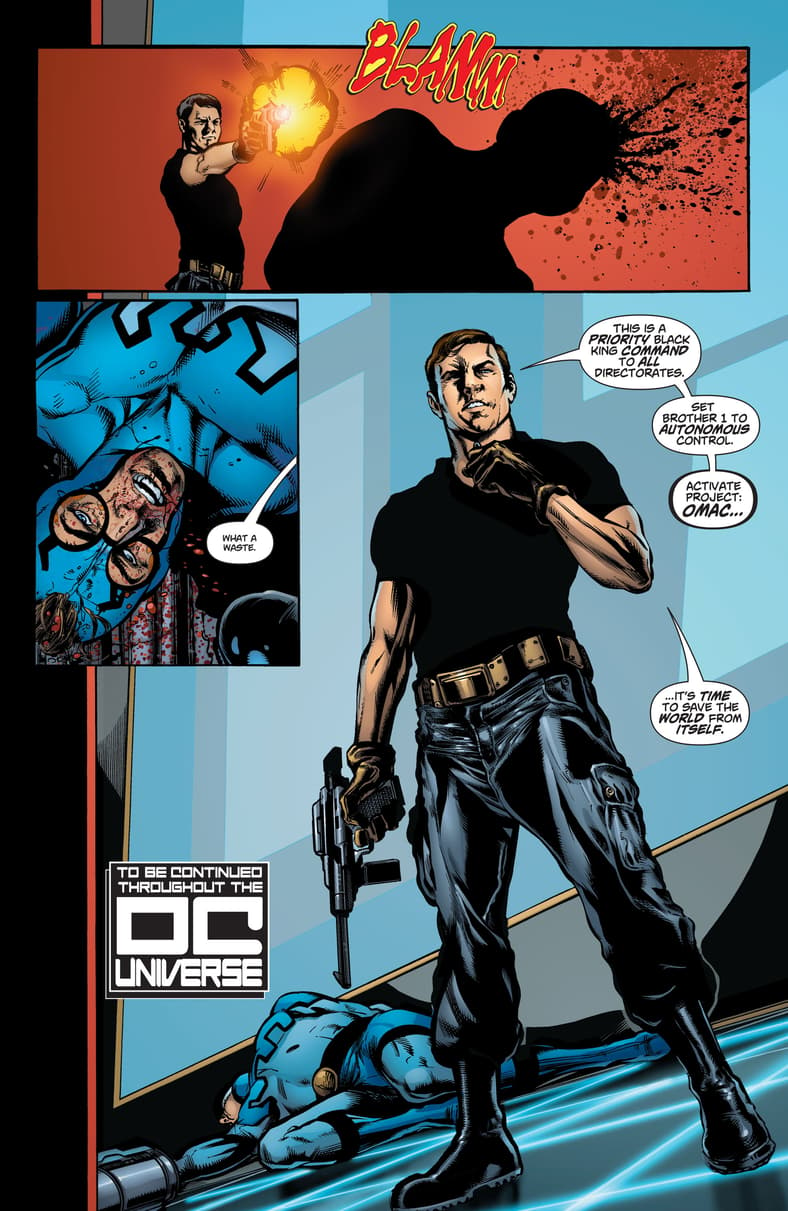
Unfortunately for Ted, before he can alert his Justice League cohorts to the danger, his silence is bought with a bullet to the brain, as delivered by the plot’s overall mastermind Max Lord, whose entire character history is retconnd as having been a cover for his clandestine, anti-metahuman campaign.
When it comes to comic books, it’s not unusual for such a radical change to an established character, especially one rooted more in ‘edgy shock value’ than anything else, to find itself undone after its novelty has worn out – for example, Wally West being a mass murderer or Captain America’s Hydra heel turn.
However, Max has proven himself one of those rare cases where such a change has found itself standing the test of time, with his firm standing as a villainous mastermind even holding through such potential ‘retcon opportunities’ as his revival by the Life Entity at the conclusion of the Green Lantern Corps.-centric Blackest Night/Brightest Day crossover, the New 52 reboot, and the DCU’s Doctor Manhattan-charged restart in Doomsday Clock.
To this end, while DC editorial is intent on keeping this version of Max on the board, the aforementioned Gunn has confirmed that he has no interesting in doing the same.
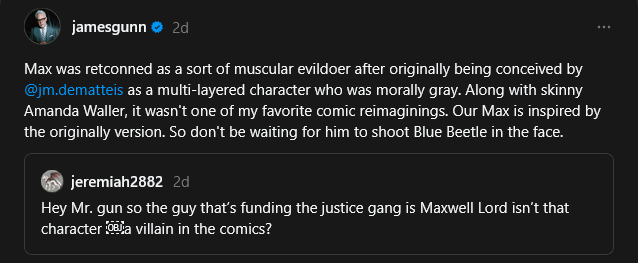
Asked by a fan on Threads if, as portrayed by Sean Gunn in Superman, “the guy that’s funding the Justice Gang is Maxwell Lord; isn’t that character a villain in the comics?”, the DC Studios Co-CEO explained, “Max was retconned as a sort of muscular evildoer after originally being conceived by [DeMatteis] as a multi-layered character who was morally gray. Along with skinny Amanda Waller, it wasn’t one of my favorite comic reimaginings.”
“Our Max is inspired by the originally version,” he then affirmed. “So don’t be waiting for him to shoot Blue Beetle in the face.”