
‘The Thing With Feathers’ Review — Drama Drenched In Darkness

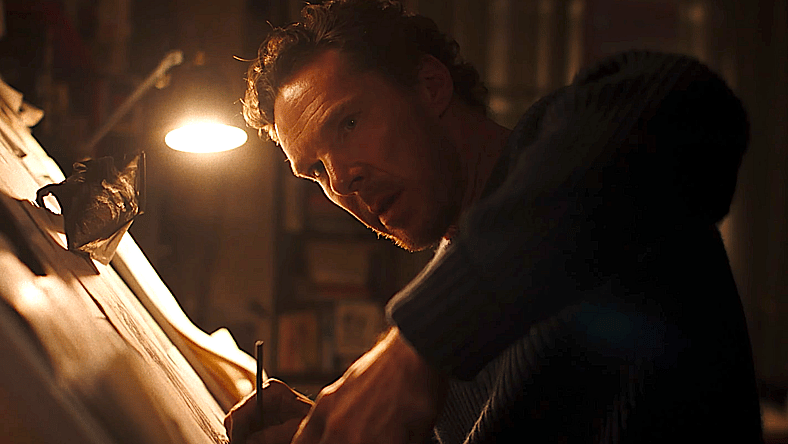
A man (Benedict Cumberbatch) becomes widowed after his wife’s sudden death and must raise his two sons while struggling with unresolved grief.
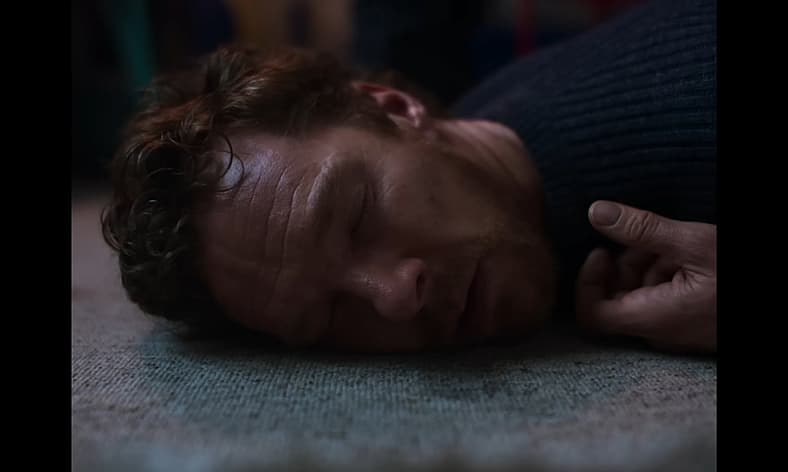
The man is an artist who illustrates graphic novels. Working mostly with charcoal and ink, the man begins drawing a crow, and he becomes so obsessed with it that the heavy grief the man carries for his deceased wife manifests itself as a human-sized crow (referred to simply as Crow and voiced by David Thewlis) that taunts him at every opportunity and follows him wherever he goes.
The Thing with Feathers is a British drama based on Max Porter’s 2015 book Grief is the Thing with Feathers. Directed by Dylan Southern, it uses a 4:3 aspect ratio (1.33:1), giving the film a classic, square shape rather than the usual widescreen format.
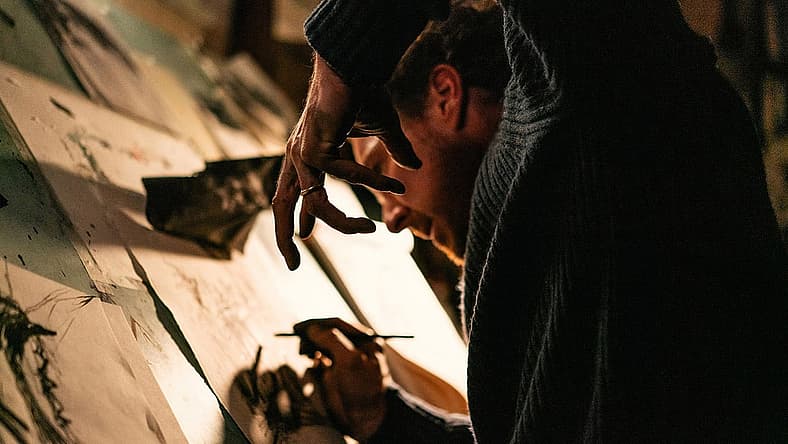
It’s typically used to create a more intimate film that invites the audience to relate to the on-screen characters. The Thing with Feathers explores a sense of claustrophobia that shrinks what we’re able to see in the film, but the wide black bars on the sides of the screen also expand the darkness and shadows, making the man’s grief and the Crow’s torment of the man seem endless.
The film opens with a man and his two sons returning home from a funeral. After putting the boys to bed, he sits alone in the dimly lit living room and breaks down, only showing his grief when they are not around.
The boys begin to deal with their mother’s death in their own way. The younger son retreats inward, speaking little to his father and hiding when confronted. The older son starts lashing out, encouraging his brother to misbehave and do what they’re not supposed to; either intentionally ignoring his father or telling him to his face that he hates him.
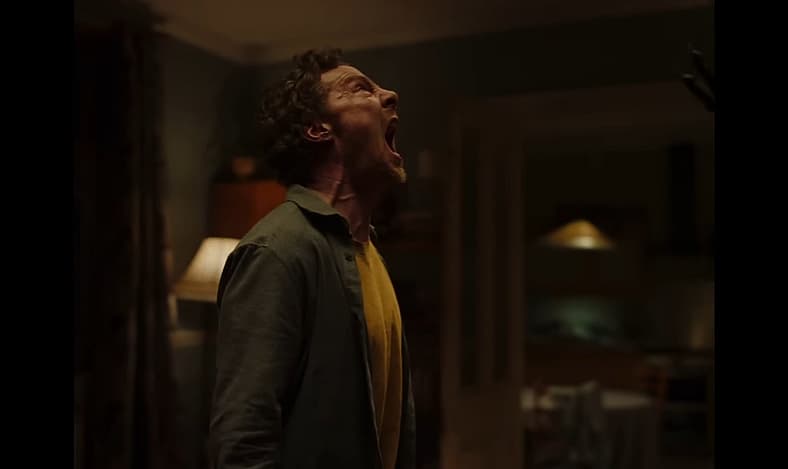
The man fights back grief and early panic attacks while trying to give his boys normalcy as he gets them ready for school. Making breakfast, he’s overwhelmed — he burns the toast, turns off the radio, and the boys’ noisy antics escalate until it’s too much to handle.
Crow’s presence starts subtly and ambiguously, blending seamlessly with the real world. At first, a normal-sized crow appears in a window, flies by, or is heard cawing and clawing outside. Then, in a surreal twist, the man finds a message from Crow on his answering machine. Overwhelmed, the man furiously sketches crows, cawing and mimicking their flight, as if reality and his hallucinations are merging.
Crow is so big because it embodies the monumental loss of the man’s wife; taunting the man and teasing him in a hateful way that seems heartless at first, albeit also forcing the man and his sons to face reality. Crow is a man-only delusion until he introduces himself to his sons and influences their decision-making for the rest of the film.
Admittedly, The Thing with Feathers isn’t totally logical, but Benedict Cumberbatch delivers a heart-wrenching performance, and the film is borderline nightmare fuel at times. The costume and makeup effects for Crow are extraordinary. The dim lights and extreme shadows hide whatever shortcomings a person in a Crow costume might have.
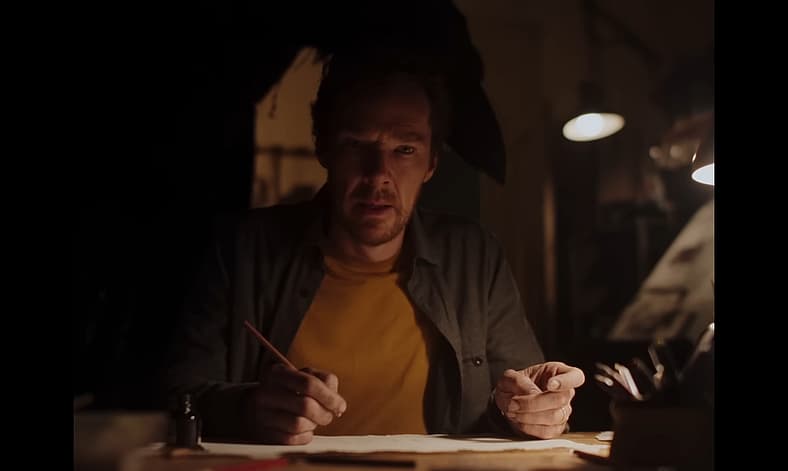
The man spends the film trapped somewhere between grief, memories, and dreams/nightmares, while the present whizzes by in fast-forward. The Crow sequences are as scary as any nightmare the man could possibly have because facing that grief and processing the fact that his wife has died are terrifying.
The illogical aspect of the film comes when Crow begins interacting with both the man and his boys. In his brain, the man interacts with Crow, but the film often shows no one else in the room. Later, when Crow interacts with the boys, the man is lying in his room, delivering Crow’s lines, but the boys are oblivious.
The film has that High Tension level of disbelief where a character is likely another character too, but the audience should ignore certain inaccuracies for the benefit of the overall story; whether it works or not is entirely up to you.
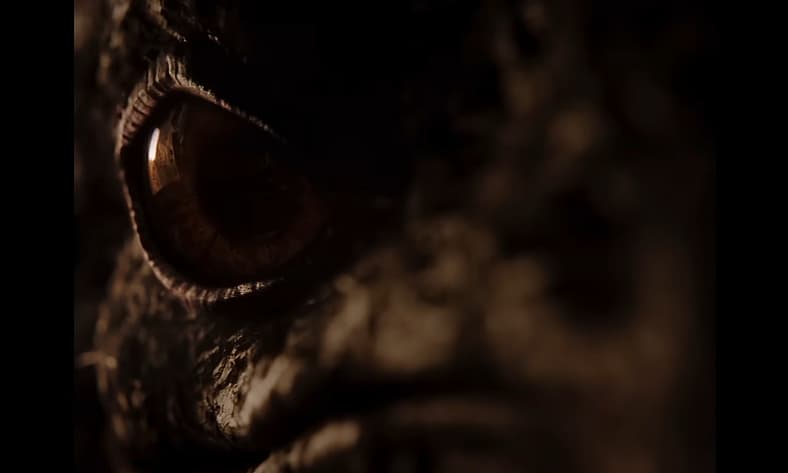
The Thing with Feathers can be an ugly and misshapen drama, but so is the process of overcoming grief. The film has an ending that is neither happy nor sad. It is mostly a way to continue forward without the person you love by your side any longer; life continues even if you may not want it to.
Benedict Cumberbatch is extraordinary, and the visuals are hauntingly mesmerizing. The Thing with Feathers is like a lingering night terror that speaks and somehow becomes a man’s moral conscience. It embraces sadness and loss in a way that complements progression over despair. Its mixed reception is warranted, but personally speaking, it’s one of the year’s most incredible films.
NEXT: ‘Keeper’ Review – A Bizarre, Genre-Twisting Nightmare
The Thing With Feathers (2025), Vue Lumiere
PROS
- A genuine portrayal of grief.
- Crow.
- Benedict Cumberbatch.
CONS
- Logic becomes a blur, much like reality.
- The boys are obnoxious turds.
