‘The Last Jedi’ Director Rian Johnson Says Kathleen Kennedy Hired Him To Make ‘Empire Strikes Back’ For Sequel Trilogy: “I Took That Assignment Very Seriously”

While Star Wars fans will forever debate whether or not he was at all successful in the effort, The Last Jedi director Rian Johnson says that rather than any sort of attempt to intentionally torch the franchise’s reputation, the highly-divisive was an earnest attempt at fulfilling Lucasfilm President Katheen Kennedy’s wish for the Sequel Trilogy’s own Empire Strikes Back.
During a recent conversation centered on his Peacock original series Poker Face, Johnson was asked by Rolling Stone‘s Alan Sepinwall about what amount of truth, if any, was behind the “popular conception that you and J.J. Abrams didn’t really talk, which is why certain ideas get undone from one movie to the next.”
Immediately moving to dispel the rumors, the director recalled, “We communicated. We met and I spent days with him and was able to get into his head and all the choices he had made. That having been said, I communicated and I went and made the movie. And he was in the middle of Force Awakens.”
“Ultimately, I feel like the choices in it, none of them were born out of an intent to ‘undo’ anything,” he added. “They were all borne out of the opposite intent of, how do I take this story that J.J. wrote, that I really loved, and these characters he created that I really loved, and take them to the next step? Kathy [Kennedy] said, ‘We’re looking at someone to do the Empire [Strikes Back] of this series.’ I took that assignment very seriously. Maybe more seriously than someone would have liked. I guess to me that didn’t mean making something that just had nods to Empire — that meant trying to genuinely do what Empire did.”
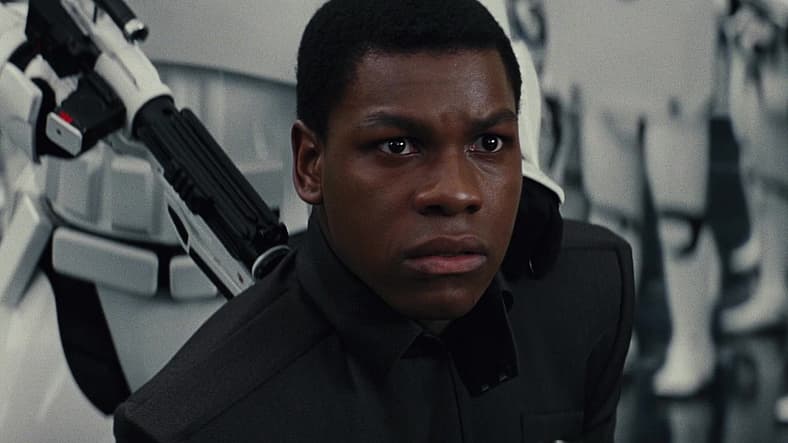
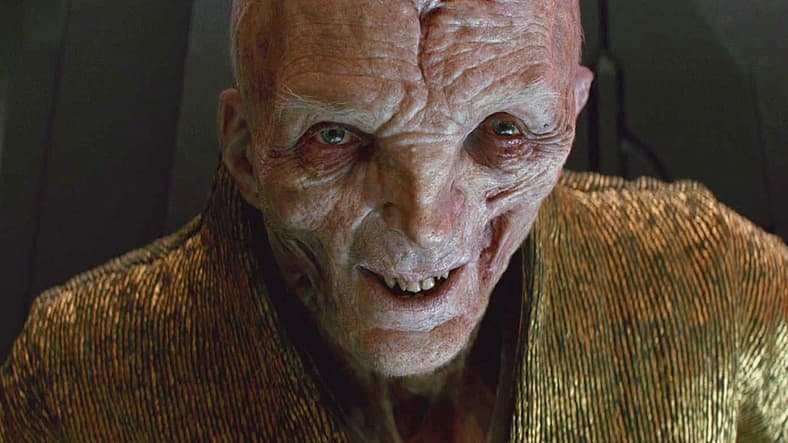
Not yet fully convinced that the two directors were in communication, Sepinwall raised the example of how “Force Awakens sets up Snoke as the big villain of the new trilogy, with a mysterious backstory. And then midway through Last Jedi, Kylo Ren slices him in two and takes over the First Order.”
In turn, Johnson explained, “That was, in reading J.J.’s script, and watching the dailies, and seeing the power of Adam Driver’s character.”
“The interrogation scene in the first movie, between Rey and Kylo, was so incredibly powerful,” said the director. “Seeing this complicated villain that’s been created, I was just so compelled by that. This is all a matter of perspective and phrasing, but to me, I didn’t easily dispense with Snoke. I took great pains to use him in the most dramatically impactful way I could, which was to then take Kylo’s character to the next level and set him up as well as I possibly could. I guess it all comes down to your point of view. I thought, ‘This is such a compelling and complicated villain. This is this is who it makes sense going forward to build around.’
From there pressed as to how it felt in reverse watching Abrams’ The Rise of Skywalker handwaving away some of his plot points, such as Rey being ‘just another person’ or Luke’s lack of irreverence for his own lightsaber, Johnson admitted, “When I saw the movie, I had a great time watching it.”
“Again, this is all about point of view,” he said. “I never approach this as, like, a territory I’m carving out for my thing. In my perspective, J.J. did the same thing with the third that I did with the second, which is not digging it up and undoing — just telling the story the way that was most compelling going forward. That means not just validating what came before, but recontextualizing it and evolving and changing as the story moves forward. I didn’t feel resentful in some way. But you’re talking about a movie made by my friends, with my friends in it. I sit down to watch a movie, and it’s a Star Wars movie. It’s all stuff I love.”
“I’m not the one to come to for a hard-hitting critique,” Johnson declared. “You can go to YouTube for that. “
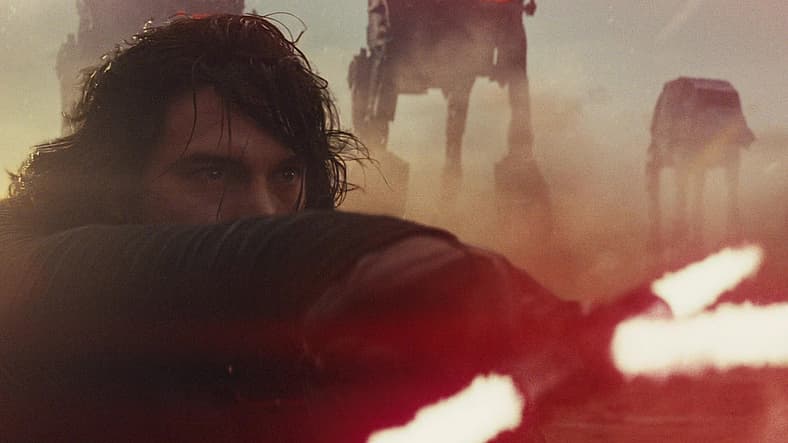
Closing out their discussion of The Last Jedi, Johnson was asked if he could provide any insight into how it felt to actively watch the backlash against his Star Wars entry unfold, to which he detailed, “In the moment, it’s a complicated chain of reactions to it.”
“It never feels good to have anybody coming after you on the Internet, and especially coming after you saying things that I think I very much do not agree with about a thing I made and put a lot of heart and soul into,” the director noted. “But at the same time, having grown up a Star Wars fan ultimately let me contextualize it and feel at peace with it in many different ways.”
“Just remembering, going back on one level to arguing on the playground about Star Wars as a kid,” he ultimately recalled. “And I was in college when the prequels came out. My friends and I were Prequel Hate Central. Everyone was ruthless at the time. And of course now the prequels are embraced. I’m not saying that as a facile, ‘Oh, things will flip around in 20 years, you’ll see!’ It’s more that this push and pull, and this hatred to stuff that seems new, this is all part of being a Star Wars fan. Culture-war garbage aside, I think that essential part of it is a healthy part.”