
New Disney CEO, Josh D’Amaro, Off to Rough Start as Stock Takes a Hit After OpenAI Canceled Sora

Hollywood’s relationship with AI companies has shifted in recent months from denial to ownership and control, with all major studios closing deals that give them their own slice of the lucrative technology. In December 2025, Disney seemed to have leaped ahead of the pack when it announced a $1 billion investment in OpenAI that would allow user-developed AI videos on Sora to include more than 200 characters from Disney-owned IPs, including Pixar, Marvel, and Star Wars. However, the latest reports have confirmed that the Mouse House was no wiser than the rest of the world when OpenAI abruptly announced the discontinuation of the app, and Disney’s response reeks of regret, and Wall Street is responding in kind.
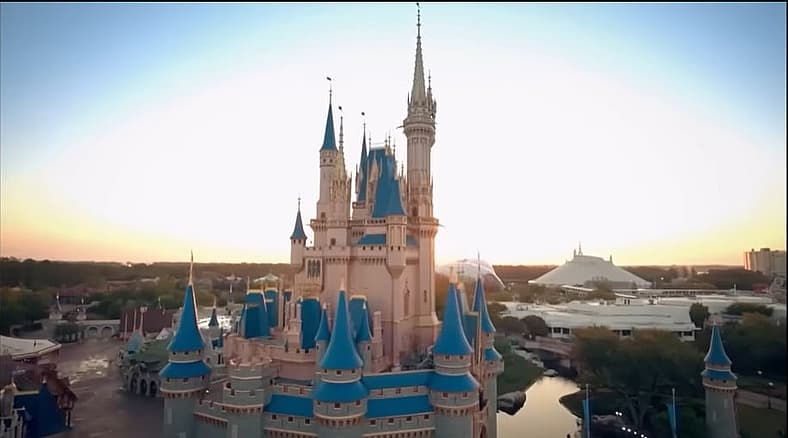
Before going into business with OpenAI, Disney waged war on almost every major American AI company, starting with popular startups Midjourney and Minimax, which Disney, NBC Universal, and Warner Bros. Discovery successfully sued for copyright infringement in June 2025. Despite losing the lawsuit, Midjourney pointed out that the studios wanted to have it both ways, suing AI companies for using their content to train AI while also using the same technology themselves. Midjourney, which is a popular VFX assistant, noted that some of the emails of its users were associated with the same studios that filed the lawsuit.
Disney, on the other hand, moved on to the next patients, Meta and Google’s then-acquired AI partner Character AI. “It has come to Disney’s attention that Character Technologies, Inc. (‘Character.ai’) has been using Disney’s copyrighted characters as interactive chatbots in its commercial Character.ai service without authorization,” read the letter from Disney’s lawyers to Character AI per Variety. In response to the letter, both Character AI and Meta removed Disney characters from their chatbots, marking Disney’s second victory.
The peak of Disney’s war came on December 10, 2025, just before the company announced the breakthrough of its $1 billion deal with OpenAI. In another cease and desist letter, Disney accused Google of copyright infringement, adding links to AI-generated YouTube videos containing Disney-licensed characters in the highly publicized accusation.
“Google is infringing Disney’s copyrights on a massive scale, by copying a large corpus of Disney’s copyrighted works without authorization to train and develop generative artificial intelligence (‘AI’) models and services, and by using AI models and services to commercially exploit and distribute copies of its protected works to consumers in violation of Disney’s copyrights,” read part of the letter from Disney lawyers.
The very following day, Google responded by removing all YouTube videos depicting Disney characters. Google’s Gemini and other video-generating tools also stopped accepting prompts to generate pictures and videos depicting Disney characters, marking what looked like an instant victory for the studio.
On that same day, Disney announced the integration of OpenAI services into the company, as well as the licensing of Disney characters to be used by Sora users to make videos. At the time, Sora was touted as the AI version of TikTok, as the app had soared to the top of the charts on the iOS App Store just two months earlier. After its launch in 2024, Sora’s output of high-quality cinematic videos was largely unmatched by competitors, leading to high expectations around its future.
Then came OpenAI’s shocking announcement on March 24, 2026. “We’re saying goodbye to Sora. To everyone who created with Sora, shared it, and built a community around it: thank you. What you made with Sora mattered, and we know this news is disappointing. We’ll share more soon, including timelines for the app and API and details on preserving your work. – The Sora Team,” the official announcement on X read.
According to the BBC, OpenAI discontinued Sora to focus its efforts on advancing its AGI technology to be adapted for “solving real-world problems,” especially through robotics. It was the least expected eventuality for the app, whose official blog saw an update just a day earlier, reading “How to create with Sora safely.” While the closure of the app was unexpected, the cracks were already there for anyone who cared to look. A January 2026 Copyleaks report described the content moderation shortcomings at OpenAI’s Sora, pointing to several sexually explicit videos that appeared on the platform as some users successfully circumvented the platform’s guidelines.
Sora was also a resource and financial sinkhole for OpenAI, which is yet to turn a profit since its creation. An unnamed source told Reuters that the platform required lots of computational resources to run and “left other teams with less firepower.” Sora’s financial returns were also abysmal, with one report saying the app earned a meager $1.4 million throughout its lifespan, as opposed to its leading product, ChatGPT, which generated $13.1 billion in 2025 alone.
Moreover, with OpenAI planning to launch its first IPO before the end of 2026, Sora’s extensive financial and resource demands, coupled with its deteriorating PR record, clearly proved too much for the Sam Altman-led tech giant, and Disney’s $1 billion input just wasn’t enough to save it.
These are details that anyone investing $1 billion in a project would be privy to, but Disney clearly missed all the red flags because, according to Reuters, the entertainment giant was caught off guard by the shock announcement, just like everyone else. Fortunately, the Mouse House had yet to spend any of the $1 billion it committed in the agreement because the deal hadn’t been finalized, but that doesn’t mean the company’s investors haven’t suffered any losses.
Disney stock, which had hit a high of $100.22 for the first time in a week by March 23, 2026, when the OpenAI announcement happened, lost over $8 per share through the week to trade at a new low of $92.20 after hours on Friday, March 27. The loss is another stumble that the company’s new CEO, Josh D’Amaro, could do without, having overseen a shaky response from investors since taking over with the stock at $101.02 on March 18.
In response to OpenAI’s shock discontinuation of Sora, a Disney spokesperson said, “As the nascent AI field advances rapidly, we respect OpenAI’s decision to exit the video generation business and to shift its priorities elsewhere. We appreciate the constructive collaboration between our teams and what we learned from it, and we will continue to engage with AI platforms to find new ways to meet fans where they are while responsibly embracing new technologies that respect IP and the rights of creators.”
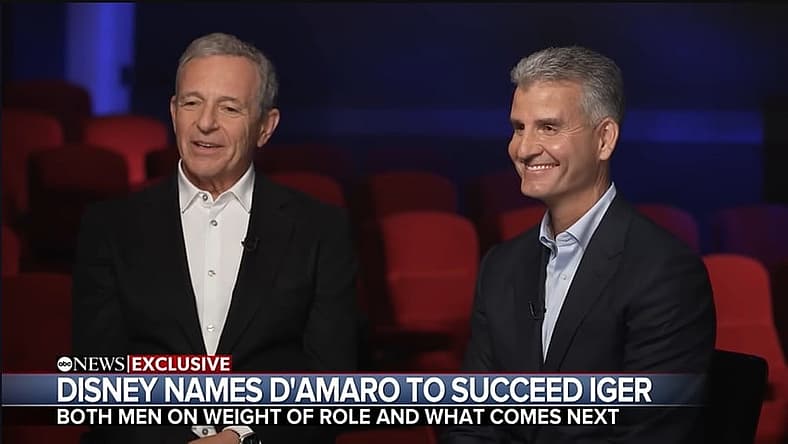
The statement clearly didn’t give investors a lot of confidence, judging by Wall Street’s reaction. However, the key component of the statement is the intent to “meet fans where they are,” which falls squarely into the hands of Google, whose Gemini and other AI video generation tools are booming. Looking back, Disney would probably undo the Cease and Desist letters to Character AI and Google because they would be the perfect fallback plan when Sora was cancelled. Unfortunately, that ship has sailed, leaving Disney with few options at home as far as AI partners are concerned.
Disney’s woes come just a few days after Netflix announced its $600 million acquisition of InterPositive, an AI startup by Ben Affleck, which is aimed at boosting the company’s post-production editing. Warner Bros. is also in bed with multiple AI companies, including AI analytics company Cynelytic, whose predictive algorithms are touted as the best in the market.
Paramount Skydance, which is on the verge of acquiring Warner Bros., has the full support of Oracle’s vast AI outlay, thanks to its CEO, David Ellison. To keep up, the Mouse House now has to find a major AI partner soon. Of course, there is always Elon Musk’s Grok and ByteDance’s Seedance 2.0, although the political fallout from dealing with any of these could be worse than what the company is already going through.
