
James Gunn Says Inspiration For ‘Peacemaker’ Earth-X Trip Did Not Come From Original Comics

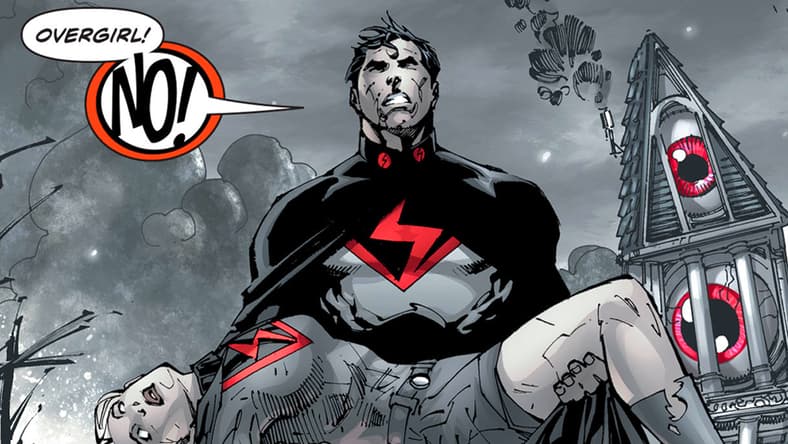
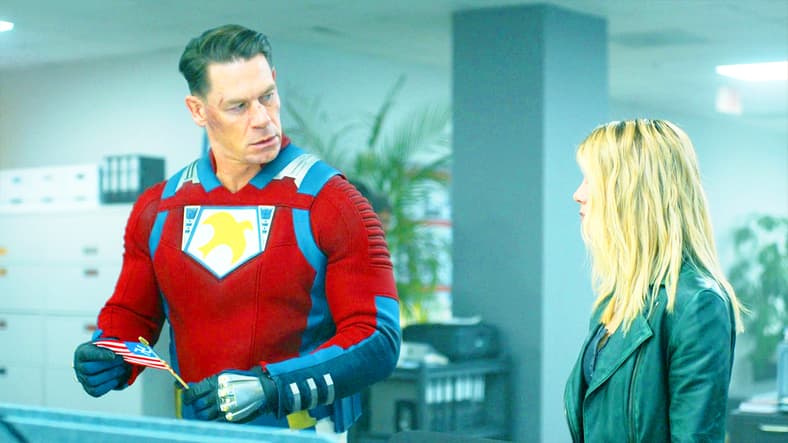
Though the parallel nightmare world has been an established and regularly-referenced part of DC canon for over 50 years, James Gunn says that Earth-X’s appearance in Peacemaker Season 2 was inspired not by any original comic book material, but rather another, unrelated piece of ‘Nazi’s won the war’ fiction.
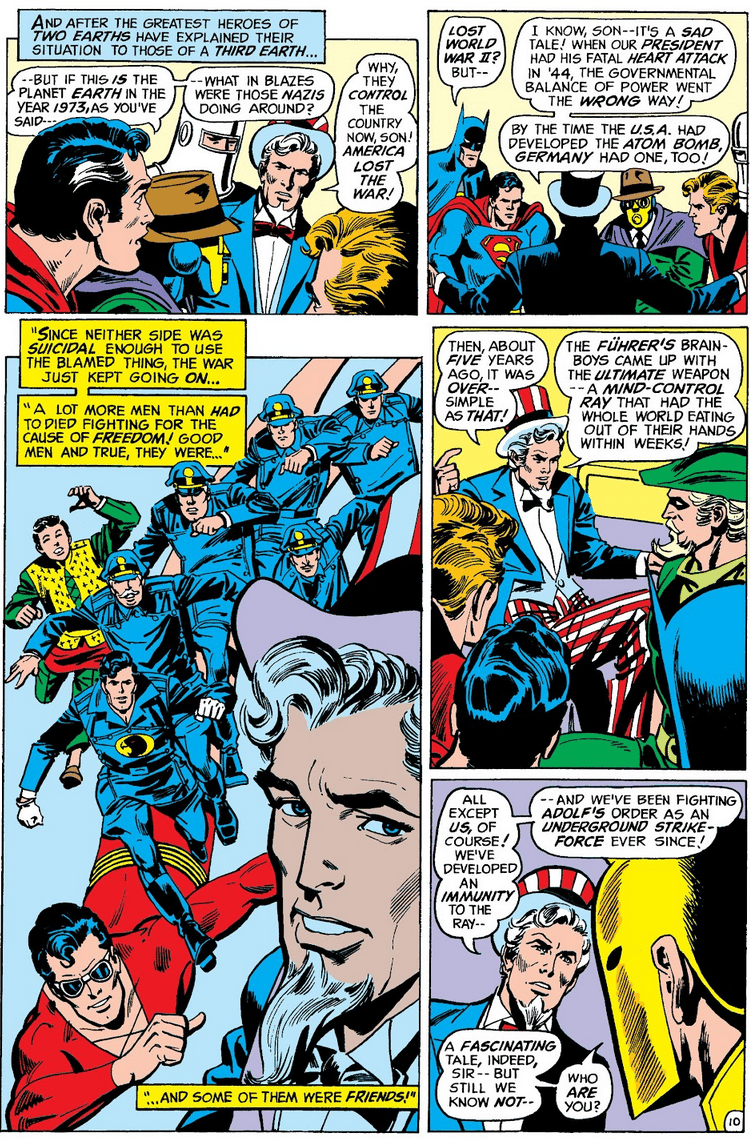
First discovered by the pre-Crisis Justice League and Justice Society in 1973’s Justice League of America Vol. 1 #107 by way of a cross-universe teleporation accident, the divergence point for Earth-X occurred when rather than passing away from a heart attack after World War 2 was essentially won, US President Franklin D. Roosevelt instead died at the height of the war in 1944.
His death resulting in a massive power void among the Allies, subsequent infighting distracted the member states long enough for Nazi Germany to develop their own atomic bomb, thus allowing the fascist power to prolong their war of aggression long into the late 1960s.
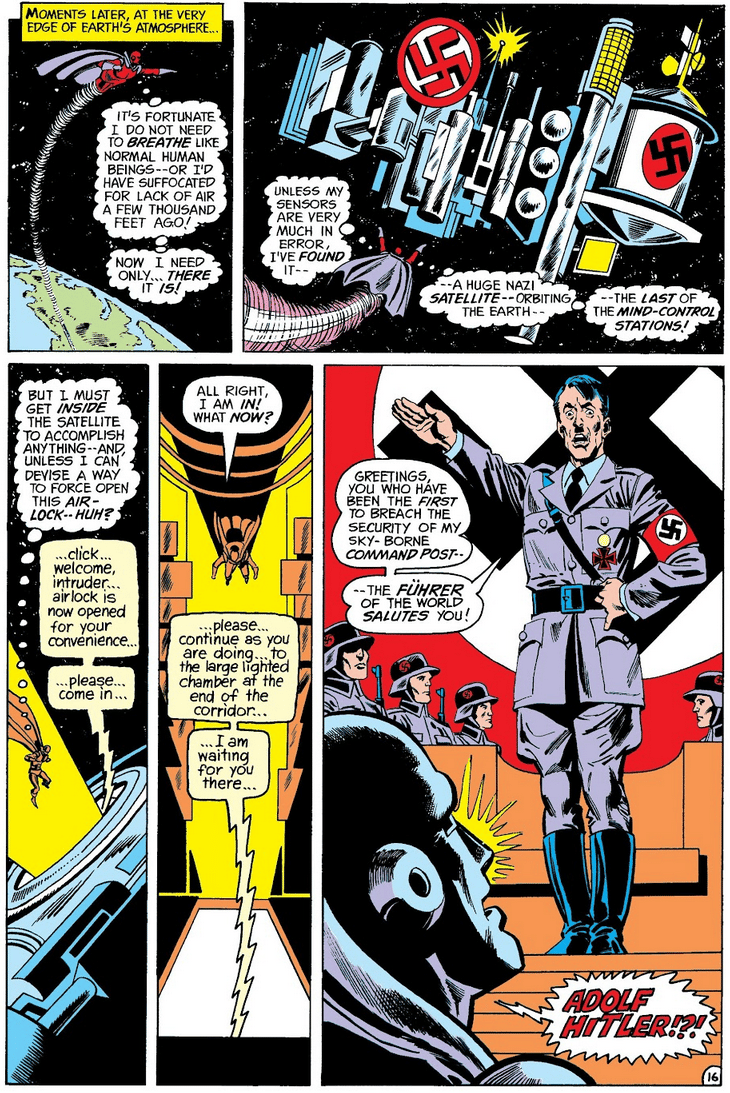
However, Hitler and his forces would eventually bring the war to an end through the use of an Earth-spanning array of mind-control satellites, as first deployed in 1968 and has kept humanity pacified and complacent ever since.
Notably, Earth-X was originally named ‘Earth-[Swastika]’ by its creator, DC writer Len Wein, and only received its current moniker due to a resulting protest over the use of the Nazi symbol from famed DC editor Julius Schwartz.
As recalled by Wein in the introduction to 2004’s Crisis on Multiple Earths Vol. 3 trade paperback collection, itself containing a reprint of his original Earth-X stories:
“As a collector, I had always been a fan of the old Quality Comics line, publishers of Plastic Man and Blackhawk and G.I. Combat and many other favorites from the 1940s until the early 1950s. When Quality folded, DC had acquired the rights to their titles and continued publishing several of them, especially the ones I just mentioned. The Quality characters seemed the next likely choice for revival.
“I went through the list of Quality characters and settled on the six you’re about to meet, including one of my personal favorites, Uncle Sam. But since the Quality characters had known their heyday mostly during the Second World War, I contrived a way to set my story in a world where that war had ended very differently. I titled this year’s extravaganza “Crisis on Earth-⟨swastika symbol⟩” and turned the script in to Julie. He loved it…with one small exception.
RELATED: ‘Peacemaker’ Season 2: Lex Luthor’s Surprising Return Explained
“Having lived through WWII, Julie had a rightly understandable antipathy toward the symbol of Nazi tyranny.
“‘No story I ever edit will include that symbol in the title,’ he told me, even as he scratched it out.
“‘But after Earth-1, Earth-2, Earth-3, and all the others, it seemed the perfect choice,’ I argued. ‘If we can’t use the swastika, what do we call the world?’
“Julie thought about it for a moment, then used his pencil to erase each of the crossbars on the swastika.
“There,’ he said proudly. ‘Earth-X is as good a name as any.'”
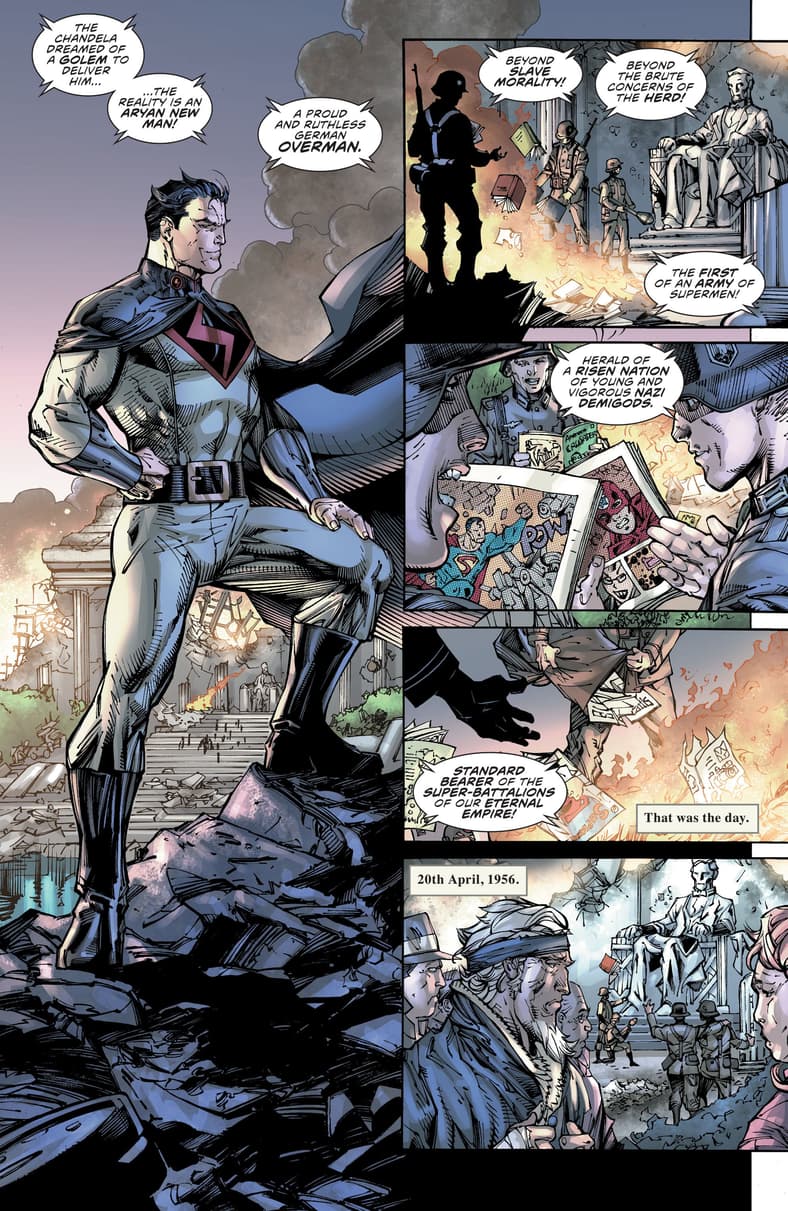
While the very concept of the DC Multiverse has wildly fluctuated over the years, with its membership and at times even its very existence being constantly remixed and redefined, Earth-X – or as it’s known in more recent multiverse phases, Earth-10 – has remained one of its ever-present realities, most recently serving as the setting for 2019’s Freedom Fighters Vol. 3 series.
But despite its regularly-referenced existence, Gunn says Earth-X’s Peacemaker appearance took absolutely zero inspiration from its source material.
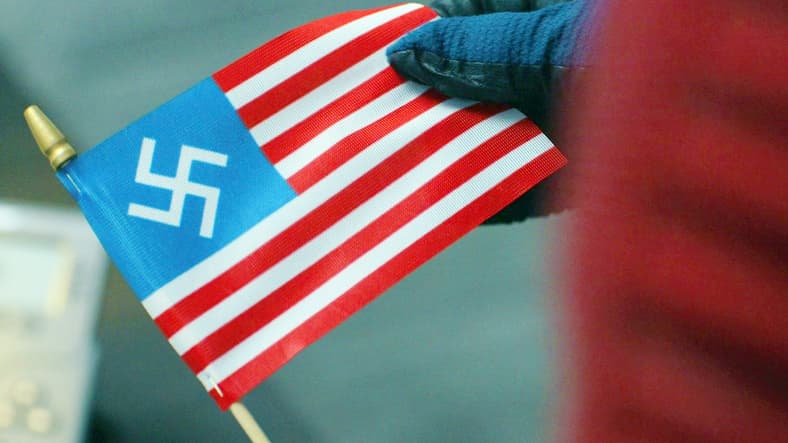
Asked during a post-Peacemaker reveal interview with Entertainment Weekly’s Sydney Bucksbaum as to “Where did you first get the idea to bring Earth-X from the comic into Season 2?”, the DCU Studios boss admitted, “Honest to God, it’s not from the comics. It’s from Philip K. Dick’s Man in The High Castle, which is a book I’ve always really liked.”
“I’m a huge Phil K. Dick fan, and that was the first book of his I ever read. It’s about an alternate Earth where the Nazis won World War II, and that was more what inspired me for this. It just seemed to be a natural outcome of Chris dealing with his personal journey. He goes and he gets everything he desires, but it is a monkey’s paw because there are a lot of things about this place that are — and even though people think he went to our Earth, it really is worse than our Earth. It is. He’s finding out the complexity of all that. Everybody thinks that means everybody there is a Nazi, everybody there is bad, but you find out that things are not that simple in the next episode.”
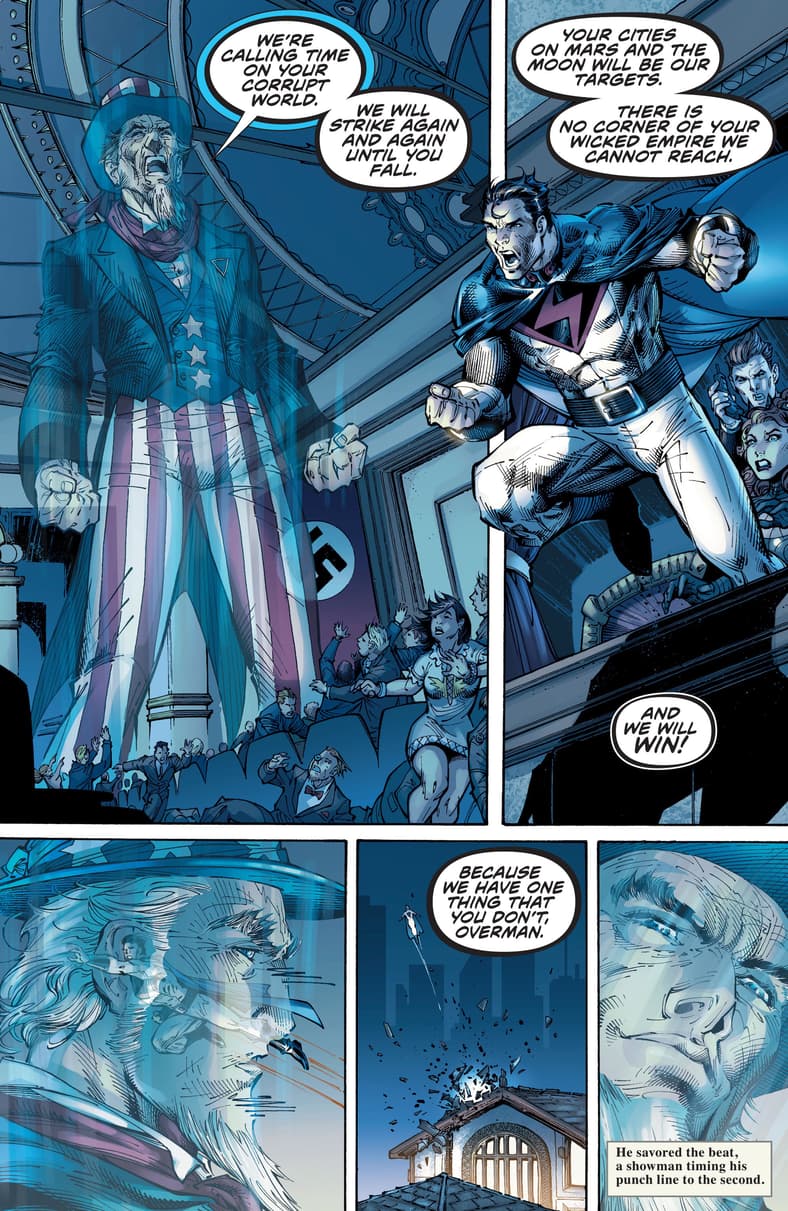
Further pressed by his host, “Were you inspired by any real life events to introduce Nazis into this season? It does feel very timely,” Gunn asserted, “Well, I can’t say for sure.”
“Obviously there’s been more neo-Nazi white supremacists in the forefront of our culture, more so than in the past, so definitely that probably has some sort of effect upon me. But I don’t think of it like that.”
“I really do come from a place of storytelling and what’s Christopher Smith’s journey, and at the end of the day, despite all of this big stuff, and I know Adebayo is in a lot of danger at the end of the episode, the core of the show is really the scene between Harcourt and Peacemaker. It’s about these characters and their relationships to each other and what is their destiny as a group of friends. To me, that’s the core of the season, and what are the lessons that Peacemaker has to learn about himself going through this very f—ed up journey.”
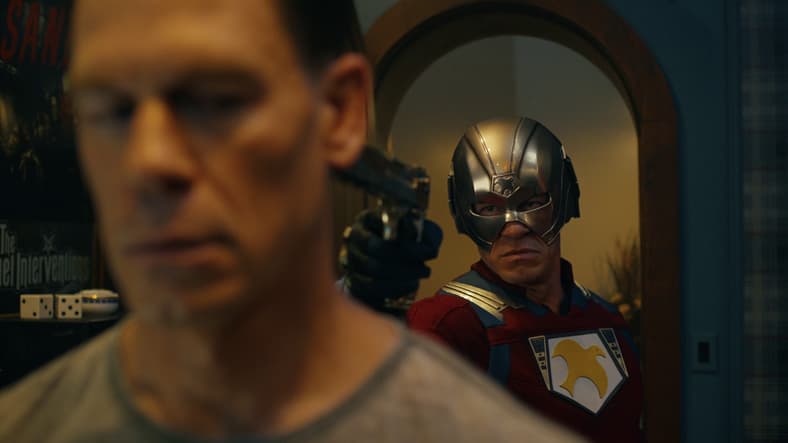
With two more left in its second season, new episodes of Peacemaker are currently debuting every Thursday on HBO Max.
NEXT: Despite Earth-2 Focus, James Gunn Says ‘Peacemaker’ Season 2 Is Not “A Multiverse Story”
