
‘Digimon Story: Time Stranger’ Director Wanted To Buck Current Trend Of “Games That Have Great Visuals But Lack Gameplay Fundamentals”


While far too many developers are currently obsessed with chasing graphics instead of doing anything interesting with those finished assets, Digimon Story: Time Stranger director Yusuke Tomono has revealed that it was his own personal frustration with this very trend that inspired him to take a gameplay-first approach to the franchise’s latest adventure.
RELATED: From Worst To First: Ranking Every Fuji TV Digimon Series
Tomono, who franchise fans may know for having directed 2012’s Digimon World: ReDigitize, elaborated on his design philosophy during a recent Time Stranger-retrospective interview, as given alongside producer Ryosuke Hara to the Japanese video game news outlet 4Gamer.
Asked at the top of the conversation as to how they felt about the immensely positive reception, particularly in light of its insanely lengthy development cycle, Tomono recalled to their host, as machine translated by DeepL, “To be honest, before release, I was mostly filled with dread. After all, development took eight years. If people reacted by saying, ‘This wasn’t fun,’ I knew it would be devastating…”

“Another root of my fear was wondering, ‘Will the methods we used eight years ago still work today?'” he further detailed. “Back then, middleware like Unreal Engine wasn’t as commonplace as it is now, so the quality of games varied much more drastically. Time Stranger was born from that slightly older approach.
“So, when comparing it to games that fully leverage current technology, there were inevitably areas where we thought, ‘We can compete here!’ and others where we had to admit, ‘We just have to give up on this part.'”
In regards to the dev challenges presented by ever-evolving nature of technology, Tomono explained, “Originally, our goal was to release it for PS4 within a much shorter timeframe. But as development stretched out, the hardware transitioned to PS5.”
“We use motion capture in Time Stranger, but the initial plan didn’t call for using it as extensively as we did. However, as we developed, certain parts absolutely required it, so we kept adding more.
That said, motion capture is now a commonplace technology; it’s not something that shines on its own. Plus, our approach wasn’t consistent throughout the entire eight years, so we were anxious about whether players would accept it.”
To this end, subsequently pressed as to what “core aspects”, if any, he and his team had held to in the face of this technological whirlwind, Tomono asserted, “I believe we remained steadfast in prioritizing fundamental aspects of game design.”
“Drawing from my long experience in game development, I incorporated elements I felt were absolutely essential to guaranteeing fun—elements that would remain universally enjoyable regardless of technological or era shifts.
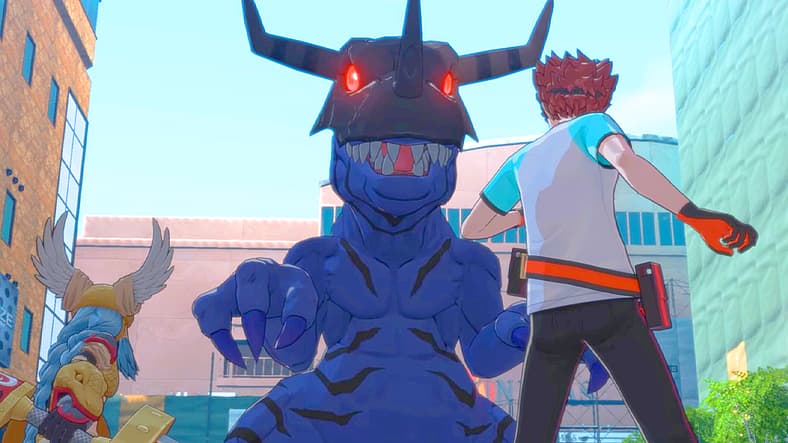
Asked to explain what he meant when it came to said ‘universally enjoyable elements’, the director elaborated, “Simply put, for an RPG, it’s the absolute fundamentals: ‘The process of leveling up is fun,’ ‘You get good gear when you explore new areas,’ ‘It’s exciting when your Digimon evolves.'”
Putting a final stamp on his thoughts, Tomono ultimately revealed, “However, I feel there’s a trend nowadays where many games boast excellent visuals but lack these foundational elements. Therefore, the policy for Time Stranger was to avoid chasing recent game trends and instead focus on valuing the most fundamental basics.”
