
‘Final Fantasy 7’ Rebirth Director Promises Nintendo Switch 2, Xbox Series S Dev Plans “Will Not In Any Way Lower The Quality” Of Series Finale

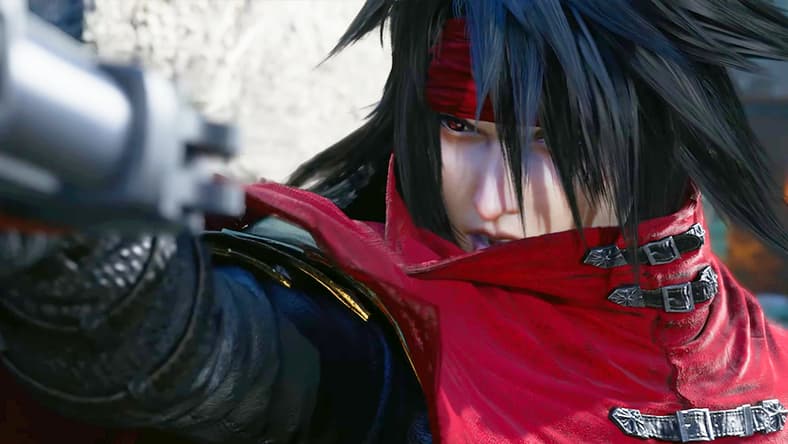
In the face of widespread concern that their commitment to launching the final entry of the Final Fantasy VII remake trilogy on all available platforms simultaneously would bring with it a drastic reduction in the game’s quality due to the Nintendo Switch 2’s generally lower hardware power, director Naoki Hamaguchi has attempted to assure fans that the upcoming Square Enix title will “not in any way” make any hardware-based compromises to its production values.
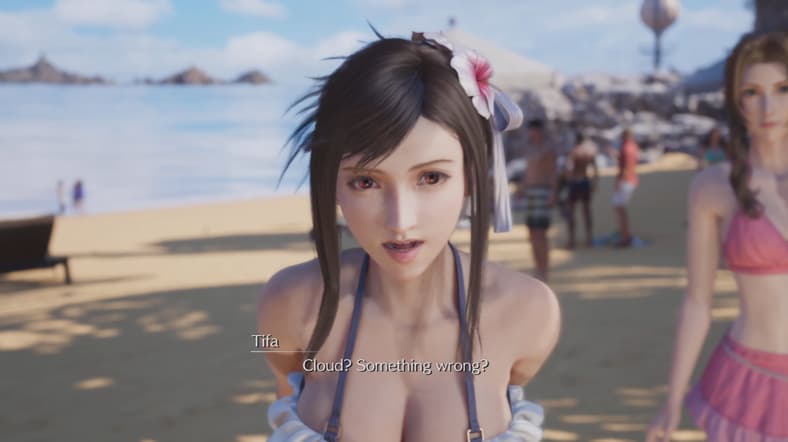
Having served as a co-director on Remake alongside original Final Fantasy VII event planner Motomu Toriyama and character/story creator Tetsuya Nomura before being promoted to the series’ full director for Rebirth, Hamaguchi addressed fans’ fears regarding the third entry’s potentially reduced presentation quality during a recent interview given to Automaton’s Ayuo Kawase.
Asked directly by his host as to whether the decision to “include comparatively lower-spec platforms like Xbox Series S and Nintendo Switch 2” in the third entry’s launch day plans had shown “any impact” on its dev team’s development plans, Hamaguchi asserted, “Both the Nintendo Switch 2 and Xbox versions have been incredibly well received and generated a lot of buzz online, and that attention has also made me realize how many people are worried about this issue.”
“However, our decision to go multiplatform with the FFVII Remake series will not in any way lower the quality of the third installment,” he added, before playfully noting, “Our development structure simply doesn’t work that way to begin with [laughs]. I suppose I’ll just have to keep saying it.”
From there, the director walked Kawase through the four “key” considerations that he and his team made in regard to their ‘lower power inclusive’ plans:
“First is CPU, the computational side that governs character behavior and executes game logic. Second is the GPU, which handles graphics rendering and related tasks.
“The third is RAM, or memory, which determines how much data can be loaded while the game is running. You often hear that the Xbox Series S is difficult to port to, and that’s largely because it has less memory compared to other platforms. If memory is insufficient, it can even cause the game to hang (as in freeze/stop responding). By contrast, the Nintendo Switch 2 has ample memory, which makes it relatively easy to develop for in that respect.
“Finally, there’s ROM, or storage media such as cartridges and discs. In the past, we often had to reduce data size to fit within physical media constraints. Broadly speaking, I believe these four elements are the key considerations in game development.
First addressing “ROM and overall game size,” Hamaguchi explained, “the Nintendo Switch 2 physical edition uses a game key-card through which data is downloaded. That means we don’t need to shrink data just to fit it on a cartridge or improve read speeds, so it’s highly unlikely to affect game sizes on other platforms.”
Next, the director turned to the RAM issue, telling his host, “The Switch 2’s ample memory means there’s little concern there. The Xbox Series S does have its limits, but we already optimize for each platform individually to the absolute limit, so memory constraints on one platform don’t impose restrictions on others.”
Moving to CPU, Hamaguchi laid out how, “Our current approach to developing games is based on the idea that if a title runs at 30fps on platforms like PS4, Nintendo Switch 2, or Xbox Series S, it should be able to achieve 60fps on high-end platforms.”
“In other words, we don’t design the game to fully saturate a high-end CPU at 30fps. Instead, on hardware that lends additional CPU headroom, we scale density elements, like increasing the number of NPCs in towns.
“As a result, towns feel more alive on higher-spec hardware, while lower-spec systems may display fewer NPCs. So even when factoring in Nintendo Switch 2 or Xbox Series S support, CPU-related bottlenecks are unlikely.”
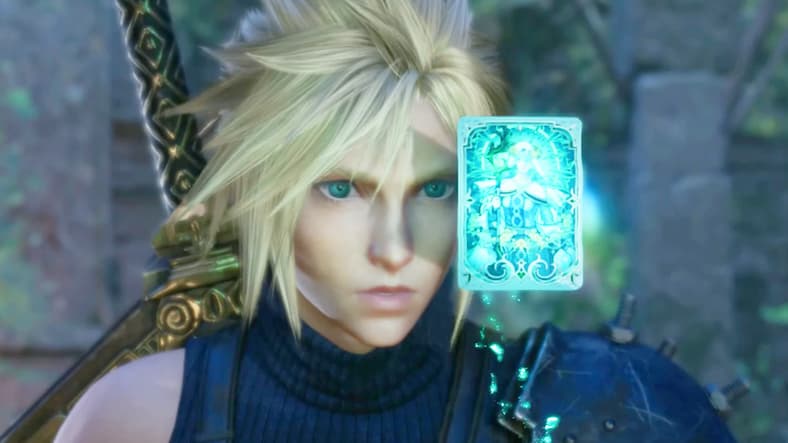
Finally addressing what he acknowledged as “the area most people are concerned about”, the director addressed the various fears relating to the finale’s need to accommodate the lower-end GPUs found in the Xbox Series S and Nintendo Switch 2, beginning with the direct clarification that not only did they “develop assets with the broad PC market in mind”, but also that their “3D assets are created at the highest quality level based on PC as the foundation.”
“When FFVII Rebirth launched, there was talk about how the PC version looked better than the PS5 version, and our philosophy will not change for the third installment. As our fundamental principle, we do not design assets to meet the lowest baseline. Instead, we create them for high-end environments first.
“We then apply what we call ‘reduction,’ adjusting assets and tuning them appropriately for each platform. This means that we avoid negatively impacting high-spec platforms. This isn’t unique to us, either, I believe it’s become fairly common practice among developers in recent years.
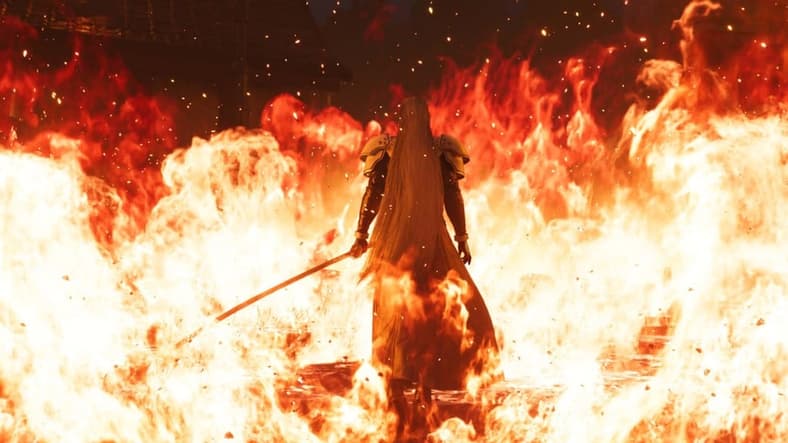
“We fine-tune things to ensure the high-quality assets we create are delivered to players at a consistent level. While optimization is necessary to match each platform’s specifications, I can state clearly that this does not impose any constraints on high-end hardware.
“By the way, when adapting the game for each platform, simply lowering quality across the board isn’t necessarily the solution, because this can compromise the intended visual expression. That’s why we make sure to review everything by eye and fine-tune so that each port matches the original vision.”
At present, the third and final entry of Cloud. and Co.’s Remake series adventure does not have a confirmed release date, but is likely due out sometime in 2027.
